Can You Buy Antibiotic Cream Over the Counter in Spain? 2026
No. In Spain, antibiotic skin creams and ointments need a prescription, including Fucidine and Bactroban. Antiseptics like Betadine are sold without one.
Dr. Daniel Cuenca Leal
Colegiado nº 284627651 · Ilustre Colegio Oficial de Médicos de Madrid
Can you buy antibiotic cream over the counter in Spain?
Quick answer: No. Every antibiotic cream and ointment for the skin that is authorised and marketed in Spain is classified as prescription-only ('Medicamento Sujeto A Prescripción Médica') in CIMA, the Spanish medicines agency's database, so a pharmacy cannot sell it to you without a prescription (CIMA). This includes treatments such as Fucidine and Bactroban. Pharmacies can only sell non-prescription antiseptics like chlorhexidine or povidone-iodine for wound cleaning.
UrgentDoc provides a video consultation with English-speaking doctors licensed in Spain, starting from EUR 39. On the video call, the doctor evaluates your skin condition, bite, or cut, and determines if a prescription is clinically indicated or if in-person evaluation is necessary. If treatment is appropriate, you receive a private prescription through Spain's REMPe e-prescription system to present at a local pharmacy, allowing you to get an antibiotic prescription in Spain by video consultation. Medicines are paid for separately at the pharmacy.
Medical Disclaimer: This article is for informational purposes only and does not replace professional medical advice, diagnosis, or treatment. Always consult a licensed healthcare provider regarding any medical condition.
According to the Spanish medicines agency's database CIMA, skin antibiotics require a prescription, meaning access routes differ across healthcare settings in Spain (CIMA):
| Healthcare Route | Wait | What you pay | Language | What you can get |
|---|---|---|---|---|
| Pharmacy (farmacia), no prescription | None | Product price | Varies | Antiseptics only; no antibiotic cream |
| Public health system (centro de salud) | Varies | Varies | Varies | Public prescription if the doctor decides |
| Private clinic | Varies | Clinic fee | Varies | Private prescription if the doctor decides |
| UrgentDoc video consultation | At a time you choose | From EUR 39; medicine paid at the pharmacy | English | Private prescription through REMPe, shown as a QR code, if the doctor decides it is appropriate |
Which antibiotic creams need a prescription in Spain?
A search of authorised and marketed topical antibacterial medicines in CIMA, the Spanish medicines agency's database on 27 October 2026, confirms that every topical antibiotic for the skin requires a medical prescription (CIMA):
| Product (Spanish name) | Active ingredient | Form | Prescription in Spain? |
|---|---|---|---|
| Fucidine 20 mg/g crema | fusidic acid (ácido fusídico) | cream | Yes |
| Fucidine 20 mg/g pomada | sodium fusidate | ointment | Yes |
| Ácido Fusídico ISDIN or Redoxfarma 20 mg/g crema | fusidic acid | cream | Yes |
| Fucidine H crema | fusidic acid + hydrocortisone | cream | Yes |
| Fucibet crema | fusidic acid + betamethasone | cream | Yes |
| Bactroban 20 mg/g pomada | mupirocin (mupirocina) | ointment | Yes |
| Plasimine 20 mg/g pomada | mupirocin | ointment | Yes |
| Mupirocina ISDIN, Farmalider or Galenicumderma 20 mg/g pomada | mupirocin | ointment | Yes |
| Bactroban Nasal or Bacnas pomada nasal | mupirocin | nasal ointment | Yes |
| Ozanex 10 mg/g crema | ozenoxacin | cream | Yes |
| Pomada Antibiótica Liade | neomycin + bacitracin + polymyxin B | ointment | Yes |
| Dermosa Aureomicina 30 mg/g pomada | chlortetracycline | ointment | Yes |
| Terramicina pomada | oxytetracycline + polymyxin B | ointment | Yes |
| Cristalmina 10 mg/ml solución cutánea | chlorhexidine (antiseptic) | solution | No |
| Betadine 100 mg/ml solución cutánea | povidone-iodine (antiseptic) | solution | No |
What are Fucidin, Bactroban and Neosporin called in Spain?
There is no product called Fucidin in Spain: fusidic acid (ácido fusídico) is sold as Fucidine, with a final 'e' - Fucidine cream and Fucidine ointment - and as generic fusidic acid creams, and every one of them needs a prescription, as do Fucidine H and Fucibet, which combine fusidic acid with a steroid (CIMA).
No product called Neosporin or Polysporin is authorised in Spain. The Spanish ointment that combines neomycin, bacitracin and polymyxin B, Pomada Antibiótica Liade, needs a prescription (CIMA).
| Name you may know | What to look for in Spain | Prescription in Spain? |
|---|---|---|
| Fucidin cream or ointment | Fucidin in Spanish pharmacies (Fucidine crema or Fucidine pomada, with a final 'e') | Yes |
| Fucidin H | Fucidine H crema | Yes |
| Fucibet | Fucibet crema | Yes |
| Bactroban ointment | mupirocin and Bactroban in Spain (Bactroban 20 mg/g pomada, or a generic 'Mupirocina' 20 mg/g pomada) | Yes |
| Mupirocin cream | none authorised in Spain - only ointments (pomada) | - |
| Neosporin or Polysporin | no product under these names; Pomada Antibiótica Liade combines neomycin, bacitracin and polymyxin B | Yes |
Useful Spanish terms: receta = prescription; sin receta = without a prescription; crema = cream; pomada = ointment; picadura = insect bite; herida = wound.
Is mupirocin sold without a prescription in Spain? (¿Se vende la mupirocina sin receta?)
Mupirocin (mupirocina in Spanish) is the active ingredient of Bactroban. In Spain it is sold as Bactroban 20 mg/g pomada, Plasimine and generic ointments such as Mupirocina ISDIN, and as nasal ointments (Bactroban Nasal, Bacnas). Every one of them needs a prescription, and no mupirocin cream is authorised in Spain - only ointments (pomada) (CIMA).
Generic 'Mupirocina' 20 mg/g ointments contain the same active ingredient as Bactroban at the same strength (CIMA). Regardless of whether a customer asks for Bactroban, Plasimine, or generic mupirocina, Spanish pharmacies cannot supply them without a prescription.
What can you buy at a Spanish pharmacy for a cut, graze or bite?
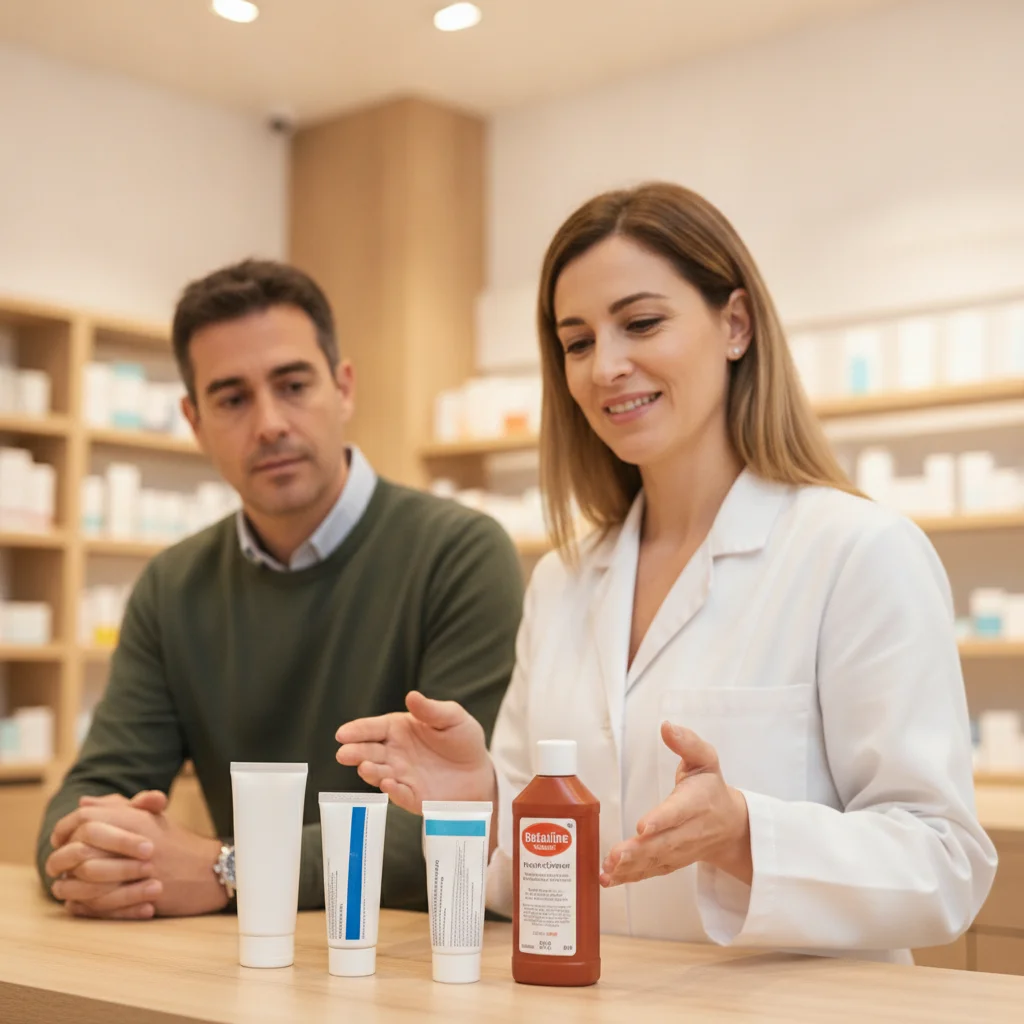
What you can buy without a prescription are antiseptics, such as chlorhexidine (Cristalmina) and povidone-iodine (Betadine) solutions. The Cristalmina leaflet describes it as an antiseptic for wounds and minor burns of the skin (CIMA; Cristalmina Leaflet).
The Cristalmina leaflet says to clean and dry the wound first, not to use it on deep or extensive wounds without consulting a doctor, not to use it in the eyes, ears, mouth or other mucous membranes, not to use several antiseptics at once or one after another, and to consult a doctor before using it in a child under 30 months (Cristalmina Leaflet). The label instructs applying it to the affected area, or on gauze, once or twice a day, and not to make more than two applications daily (Cristalmina Leaflet). If it enters the eyes, the leaflet states to wash immediately and abundantly with water, and to consult a doctor immediately if irritation, redness, pain, or visual disturbances occur (Cristalmina Leaflet).
An antiseptic is not an antibiotic, and the leaflet does not say it treats an infected bite, impetigo or cellulitis (Cristalmina Leaflet). A community pharmacist can advise about self-care treatments (NICE NG182).
Is your bite infected, or is it a reaction?
NICE, the UK's National Institute for Health and Care Excellence, says that a skin reaction that comes on quickly after an insect bite or sting is likely to be an inflammatory or allergic reaction rather than an infection, that redness and itching are common and may last for up to 10 days, and that most insect bites or stings will not need antibiotics (NICE NG182). NICE points out that avoiding scratching may reduce inflammation and the risk of infection, and advises seeking medical help if symptoms worsen rapidly or significantly at any time, or if you become generally unwell (NICE NG182).
When distinguishing between a reaction and an active infection, NICE lists increased pain, inflammation, fever, discharge, or an unpleasant smell as signs of infection for bite wounds (NICE NG184). If you are unsure whether a red or swollen area is an expected reaction or an infection, an online rash consultation allows a doctor to assess the skin.
When does an infected bite, cut or impetigo need a doctor?
For an insect bite or sting with signs of infection, NICE points prescribers to its cellulitis guideline, which recommends an antibiotic, given by mouth first line when the person can take oral medicines (NICE NG182; NICE NG141). NICE defines cellulitis as an infection of the tissues under the skin, usually resulting from a contaminated break in the skin, characterised by acute localised inflammation and swelling (NICE NG182).
In Spain, fusidic acid cream is licensed for short-term treatment of superficial skin infections - impetigo and impetiginised skin conditions, on its own when there are only a few lesions - and mupirocin ointment for impetigo, folliculitis, boils, ecthyma and infected eczema, dermatitis or injuries, provided the infected area is limited (Fucidine SPC; Bactroban SPC). Both products are authorised for use in adults and children on prescription (Fucidine SPC; Bactroban SPC).
The Spanish label for Fucidine says strains of Staphylococcus aureus resistant to fusidic acid have been reported with its use on the skin and that, as with all antibiotics, widespread or repeated use can increase the risk of resistance (Fucidine SPC). The Spanish label for Bactroban says that if there is no improvement after 5 days, the diagnosis or the treatment should be reconsidered (Bactroban SPC). The Bactroban label also states it must not be used in the eyes or inside the nose, and notes that its polyethylene glycol base can be absorbed through open wounds and damaged skin and is cleared by the kidneys, meaning it should not be used where large amounts could be absorbed, especially with moderate or severe kidney impairment (Bactroban SPC).
If you are caring for a child with an infected bite or impetigo, an online pediatrician consultation allows you to discuss the symptoms directly with a doctor.
How do you get a prescription for antibiotic cream in Spain?
If you require clinical evaluation for an infection while in Spain, you can access medical care without navigating an in-person clinic:
- Book a video consultation with our English-speaking doctors licensed in Spain, with consultations available from EUR 39.
- Connect to the call in good light so the doctor can evaluate your bite, wound, or skin; clear photos of the area can also help during the assessment. Have your passport, DNI, or NIE number ready, as identification is required for the prescription.
- Discuss your symptoms, when they began, any changes over time, as well as allergies, existing health conditions, and current medicines.
- The doctor determines whether medical treatment is appropriate or if you require an in-person examination. A prescription is never guaranteed, as the clinician may determine that no antibiotic is clinically indicated.
- If the doctor decides a medicine is appropriate, you receive a private prescription through Spain's REMPe e-prescription system, which you show as a QR code at a Spanish pharmacy; the pharmacist checks it before dispensing.
You can book a consultation for an antibiotic prescription in Spain to speak with a doctor. Spain's rule for prescriptions from other EU countries does not cover UK or US prescriptions, so you need a Spanish one. You can read more about how foreign prescriptions work in Spain when arriving with non-EU documentation.
When should you seek urgent or in-person care?
Certain clinical signs require immediate in-person assessment rather than remote evaluation:
- NICE advises seeking medical help if cellulitis symptoms worsen rapidly or significantly at any time, or do not start to improve within 2 to 3 days of antibiotics, and lists redness or swelling spreading beyond where it started, severe pain out of proportion to the infection, and becoming very unwell as reasons to reassess (NICE NG141). NICE notes that some initial spreading may occur and that redness may be less visible on darker skin tones (NICE NG141). NICE also states that severe pain out of proportion to the wound may indicate toxin-producing bacteria (NICE NG182).
- Red streaks spreading from an infected area towards the armpit or groin, especially with fever or chills, can be a sign of lymphangitis, an infection of the lymph vessels that may spread within hours; the US National Library of Medicine's MedlinePlus advises contacting a doctor or going to an emergency department if you have its symptoms (MedlinePlus). NICE lists lymphangitis as a reason to consider hospital referral or specialist advice (NICE NG141).
- If an infection or bite is located around the eyes or nose, or in the mouth or throat, NICE advises considering hospital referral or seeking specialist advice (NICE NG182; NICE NG141). NICE advises hospital referral if signs suggest sepsis (NICE NG141).
- For a bite from a person or an animal, NICE asks clinicians to assess the wound and the risk of tetanus, rabies or a bloodborne viral infection, and to offer preventive antibiotics for a cat bite that has broken the skin and drawn blood - so have any such bite that has broken the skin assessed by a doctor rather than treating it with a cream (NICE NG184).
- NICE advises considering referral or specialist advice for people with a bite or sting who are severely immunocompromised and have signs of an infection (NICE NG182).
- If someone displays signs of a systemic allergic reaction to a bite or sting, NICE recommends hospital referral (NICE NG182); call 112 immediately in Spain for emergency assistance.
- If you have already started treatment, the Spanish label for Bactroban states that diagnosis and treatment should be reconsidered if there is no improvement after 5 days (Bactroban SPC), and NICE recommends seeking medical help if cellulitis does not start to improve within 2 to 3 days of antibiotics (NICE NG141).
Our doctors cannot examine you physically, run tests or handle emergencies. If the doctor thinks you need to be seen in person, they will tell you.
Frequently Asked Questions
Can you buy Fucidin cream over the counter in Spain?
No. There is no product called Fucidin in Spain: fusidic acid (ácido fusídico) is sold as Fucidine, with a final 'e' - Fucidine cream and Fucidine ointment - and as generic fusidic acid creams, and every one of them needs a prescription, as do Fucidine H and Fucibet, which combine fusidic acid with a steroid (CIMA). Spanish pharmacies cannot dispense them without a valid medical prescription.
Do you need a prescription for Bactroban in Spain?
Yes. In Spain, mupirocin is sold as Bactroban 20 mg/g pomada, Plasimine, generic ointments such as Mupirocina ISDIN, and as nasal ointments like Bactroban Nasal and Bacnas (CIMA). Every one of these products is classified in CIMA as prescription-only, meaning a pharmacy cannot provide them over the counter (CIMA).
Are mupirocin and Bactroban the same thing?
Mupirocin is the active antibacterial ingredient, while Bactroban is a brand name under which it is marketed. In Spain, generic 'Mupirocina' 20 mg/g ointments provide the same active ingredient at the same strength as Bactroban (CIMA). All authorised formulations of mupirocin in Spain are prescription-only medicines (CIMA).
Is there a Neosporin equivalent in Spain?
No product named Neosporin or Polysporin is authorised in Spain (CIMA). The Spanish ointment combining neomycin, bacitracin, and polymyxin B is Pomada Antibiótica Liade, and it requires a doctor's prescription (CIMA).
What can I put on an infected mosquito bite in Spain?
NICE points out that a rapid-onset skin reaction after an insect bite is usually inflammatory or allergic rather than an infection, and that most bites do not require antibiotics (NICE NG182). For minor skin wounds, non-prescription antiseptics like chlorhexidine (Cristalmina) or povidone-iodine (Betadine) can be bought at a pharmacy, but the Cristalmina leaflet does not state that it treats an infected bite or cellulitis (CIMA; Cristalmina Leaflet). If a bite has signs of infection, NICE recommends treatment under its cellulitis guideline, which specifies an oral antibiotic first line when oral medicines can be taken, meaning the condition requires clinical evaluation by a doctor (NICE NG182; NICE NG141).
Can I use my UK prescription for Fucidin in Spain?
Spain's rule for prescriptions from other EU countries does not cover UK or US prescriptions, so you need a Spanish one. You can arrange a video consultation with our licensed doctors, who will evaluate your skin condition and decide whether issuing a Spanish prescription is clinically appropriate.
Can I get antibiotic cream prescribed online in Spain?
You can book a video consultation with our English-speaking doctors licensed in Spain, starting from EUR 39. The doctor will examine your skin or bite to determine if treatment is needed, though prescriptions depend entirely on clinical assessment and are never guaranteed. If the doctor decides a medicine is appropriate, you receive a private prescription through Spain's REMPe e-prescription system, which you show as a QR code at a Spanish pharmacy; the pharmacist checks it before dispensing.
If you need a clinical evaluation for a bite, cut, or skin infection while in Spain, book a video consultation with an English-speaking licensed doctor.