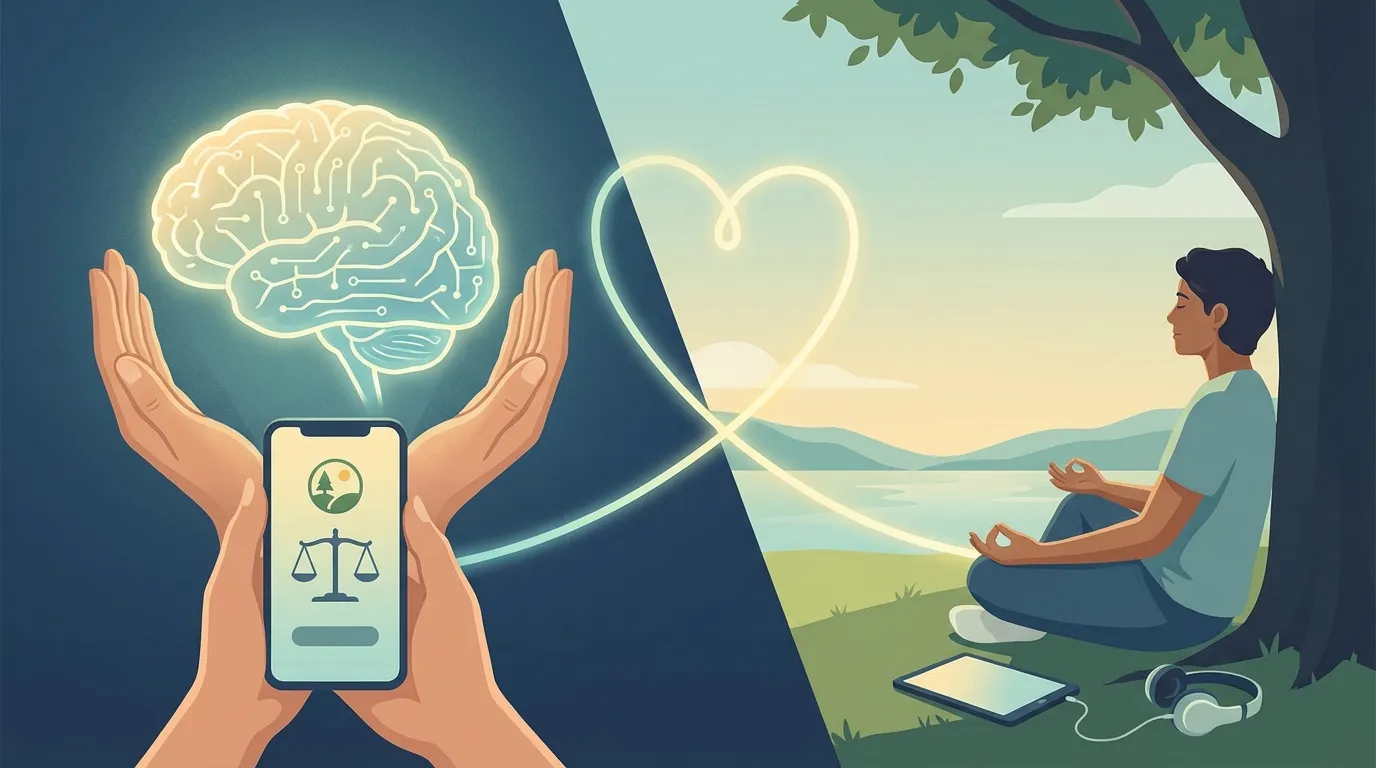
Psychological Erectile Dysfunction: Causes & Treatment
Psychological ED is caused by anxiety, stress or depression — not poor blood flow. Learn how to identify it and discover effective treatments available online in Spain.
Dr. Daniel Cuenca Lead
Medical Professional

🩺 Psychological Erectile Dysfunction: When Anxiety and Stress Affect Your Sex Life
Psychological erectile dysfunction — also called psychogenic ED — is a form of erectile dysfunction caused primarily by mental health factors rather than physical problems with blood flow or nerves. It is one of the most common causes of erection problems in younger men, and it is also one of the most treatable.
According to StatPearls (NCBI), while the majority of ED cases in older men have an organic (physical) component, younger men presenting with unexplained ED are more likely to have a primary psychological cause. Even when the underlying trigger is physical, almost every man with ED experiences some psychological consequences — anxiety, shame, loss of confidence — that can make the problem worse.
If you're struggling with erection problems and suspect stress, anxiety or emotional factors may be involved, book a confidential online consultation with UrgentDoc — our licensed doctors can help you understand what's happening and guide you towards the right treatment.
⚠️ Medical disclaimer: This article is for informational purposes only and does not replace professional medical advice, diagnosis or treatment. Always consult a qualified healthcare provider about your individual circumstances.
🔹 What Is Psychological Erectile Dysfunction?
Psychogenic erectile dysfunction is the inability to achieve or maintain an erection due to psychological or emotional factors, rather than a problem with blood vessels, nerves or hormones. The Cleveland Clinic classifies it as one of four main types of ED (alongside vascular, neurogenic and hormonal).
The brain is the starting point of every erection. Sexual arousal triggers signals from the brain through the nervous system to increase blood flow to the penis. When psychological factors — such as anxiety, stress or depression — interfere with these signals, an erection either doesn't happen or doesn't last.
Importantly, psychogenic ED does not mean the problem is "not real" or "all in your head." The physical effect is identical to other forms of ED: you cannot get or keep an erection. The difference is in the underlying cause, which shapes the most effective treatment approach.
🔹 How to Tell If Your ED Is Psychological
Distinguishing between psychological and physical ED is a key part of diagnosis. According to StatPearls (NCBI), the following features point towards a psychological cause:
- Sudden onset — the problem appeared abruptly, often linked to a specific event, relationship change or stressful period
- Situational nature — you can get erections in some situations (e.g., masturbation, morning erections) but not during intercourse with a partner
- Normal morning erections — if you still wake up with firm erections, it suggests the physical "machinery" is working
- High daily variability — some days erections are fine, other days they are not
- Linked to a new partner or life event — the problem started around the time of a major change
In contrast, physical ED tends to develop gradually, occurs in all situations (including morning erections), and worsens steadily over time.
💬 Not sure whether your ED is psychological or physical? An online consultation with UrgentDoc can help clarify the cause. Our doctors will ask targeted questions about your symptoms, timing and circumstances to guide diagnosis.
🔹 Common Psychological Causes of ED
Performance Anxiety
Performance anxiety is the single most common psychological cause of ED, particularly in younger men and at the start of new sexual relationships. It creates a self-reinforcing cycle:
- You worry about whether you'll be able to get an erection
- The worry activates your "fight or flight" stress response
- Stress hormones (adrenaline, cortisol) constrict blood vessels and inhibit arousal
- The erection fails — confirming your fear
- Next time, the anxiety is even worse
The Mayo Clinic explains that even a minor physical issue that slightly slows sexual response can trigger performance anxiety, which then makes the ED significantly worse — creating a vicious cycle that is difficult to break without intervention.
Stress
Chronic stress — from work, finances, family responsibilities or life transitions — keeps the body in a state of heightened cortisol production. Elevated cortisol suppresses testosterone and diverts blood flow away from non-essential functions, including sexual arousal. Men undergoing major life changes (job loss, divorce, relocation, bereavement) are particularly vulnerable.
Depression
The relationship between depression and ED is bidirectional and well documented. Research cited by StatPearls shows that:
- Men with depression are almost 40% more likely to have ED than men without depression
- Conversely, men with ED are nearly 3 times more likely to develop depression
Depression affects sexual function through multiple pathways: reduced libido, fatigue, low self-worth, and changes in brain chemistry that interfere with arousal signals. To make matters more complex, many antidepressant medications — particularly SSRIs — can also cause or worsen ED as a side effect.
Anxiety Disorders
Generalised anxiety disorder (GAD), social anxiety and health anxiety can all contribute to ED. The constant state of mental alertness associated with anxiety disorders makes it difficult to relax enough for sexual arousal.
Relationship Problems
Unresolved conflicts, poor communication, loss of emotional intimacy, infidelity or a mismatch in sexual expectations can all manifest as ED. In many cases, the ED is an expression of underlying relationship tension rather than a standalone problem.
Past Trauma
Previous negative sexual experiences, sexual abuse or trauma can create deep-seated associations between sex and distress. These associations may not be consciously recognised but can powerfully inhibit sexual arousal.
Guilt and Shame
Cultural, religious or moral beliefs about sex can create feelings of guilt that interfere with arousal. This is more common than many men realise and can be effectively addressed through therapy.
Pornography-Related Concerns
Some men report difficulty achieving erections with a partner after heavy use of internet pornography, potentially due to desensitisation to real-life sexual stimuli. While the research on this topic is still evolving, it is a concern that doctors increasingly encounter in clinical practice.
🔹 The Vicious Cycle: How Psychological ED Sustains Itself
One of the most challenging aspects of psychological ED is its self-perpetuating nature. Understanding this cycle is the first step to breaking it:
- An initial episode occurs — perhaps due to stress, tiredness or alcohol
- Fear of recurrence develops — "what if it happens again?"
- Self-monitoring during sex — instead of being present, you watch yourself for signs of failure (this is sometimes called "spectatoring")
- Anxiety blocks arousal — the brain's stress response overrides the sexual response
- The erection fails again — reinforcing the belief that something is wrong
- Avoidance behaviour begins — you start avoiding intimacy altogether, which damages your relationship and self-esteem
The Cleveland Clinic notes that even when there is no underlying psychological disorder, simply having ED creates anxiety, reduced self-esteem and relationship strain — all of which make future episodes more likely.
🔹 Diagnosis: What to Expect
A doctor evaluating psychological ED will typically:
- Take a detailed medical and sexual history — including when the problem started, whether onset was sudden or gradual, and whether you still get morning or nocturnal erections
- Ask about mental health — screening for depression, anxiety, stress levels, relationship health and any history of trauma
- Identify situational patterns — whether ED occurs in all situations or only with a partner
- Rule out physical causes — basic blood tests (testosterone, blood glucose, cholesterol, thyroid function) may be recommended to exclude hormonal or vascular issues
- Use validated questionnaires — such as the International Index of Erectile Function (IIEF) to score symptom severity
According to StatPearls, a careful and detailed personal and sexual history typically allows determination of significant psychogenic factors without the need for expensive specialised testing like nocturnal penile tumescence monitoring.
At UrgentDoc, our sexual health consultations cover the history and screening questions via secure video. If blood tests are needed, your doctor will arrange a referral to a local laboratory in Spain.
🔹 Treatment Options for Psychological ED
The good news: psychogenic ED generally has an excellent response to treatment. StatPearls confirms that "psychosexual causes generally have a good response to counselling" and notes that the overall prognosis is very positive when the right approach is taken.
Psychosexual Therapy and Counselling
This is widely considered the most effective treatment for psychological ED. A trained psychosexual therapist or sex therapist can help you:
- Identify and address the specific psychological triggers contributing to your ED
- Break the performance anxiety cycle through structured techniques such as sensate focus exercises (gradual, non-pressured physical intimacy with a partner)
- Improve communication with your partner about sexual needs and expectations
- Challenge unhelpful thought patterns that fuel anxiety during sex
The NHS recommends counselling and therapy for erection problems linked to emotional or mental health factors. For best results, partners should be involved in the therapy process when possible.
Cognitive Behavioural Therapy (CBT)
CBT is a structured, evidence-based form of therapy that helps you identify and change negative thought patterns and behaviours. For psychological ED, CBT can target:
- Catastrophic thinking ("one failed erection means I'll never perform again")
- "Spectatoring" (self-monitoring during sex instead of being in the moment)
- Avoidance behaviours (withdrawing from intimacy)
- Unrealistic expectations about sexual performance
A meta-analysis cited by StatPearls found that psychological interventions are effective for the treatment of ED, including comparisons to sildenafil treatment and other medical therapies.
Mindfulness and Stress Reduction
Mindfulness-based techniques can help reduce the anxiety and "overthinking" that underpin psychological ED. Practices include:
- Mindful breathing before and during intimacy to stay present
- Body scan meditation to reconnect with physical sensations
- Progressive muscle relaxation to reduce physical tension
- Regular mindfulness practice (even 10 minutes daily) to lower baseline stress levels
These techniques are most effective when combined with therapy or counselling.
Oral Medications (PDE5 Inhibitors)
While medications like sildenafil (Viagra) and tadalafil (Cialis) are primarily designed for physical causes of ED, they can also play a useful role in breaking the psychological cycle. By reliably producing an erection, they can:
- Restore sexual confidence after repeated failures
- Reduce performance anxiety by removing uncertainty
- Provide a "bridge" while therapy addresses the underlying psychological issues
The NHS lists PDE5 inhibitors as a first-line treatment option regardless of the ED type. However, for purely psychological ED, medication alone is unlikely to be a long-term solution — it's most effective when combined with therapy.
If appropriate, UrgentDoc doctors can issue an e-prescription for ED medication after assessing your suitability via online consultation.
Treating Underlying Mental Health Conditions
If depression, generalised anxiety or another mental health condition is contributing to your ED, treating that condition is essential. Options include:
- Antidepressant medication — though some SSRIs can worsen ED, alternatives such as bupropion or mirtazapine are less likely to affect sexual function. Your doctor can adjust your medication if needed.
- Anxiety management — through therapy, medication, or both
- Referral to a psychiatrist or psychologist — for more complex mental health presentations
For more on managing mental wellbeing, see our guide: Mental Health in the Digital Age: Balancing Technology and Wellbeing.
Lifestyle Changes That Support Recovery
While psychological ED isn't caused by lifestyle factors, healthy habits support both mental health and sexual function:
- Regular exercise — reduces cortisol, boosts endorphins, and improves body confidence. The Cleveland Clinic recommends at least 45 minutes of vigorous cardiovascular exercise three times per week
- Adequate sleep — poor sleep is linked to lower testosterone and increased anxiety
- Limit alcohol — alcohol is a depressant that impairs both sexual response and mental health
- Reduce pornography consumption if this is contributing to the problem
- Open communication with your partner about what you're experiencing
🔹 Advice for Partners
Erectile dysfunction affects both people in a relationship. If your partner is experiencing psychological ED, the Cleveland Clinic recommends:
- Encourage open communication — create a safe, non-judgmental space to discuss the issue
- Don't take it personally — psychological ED is not a reflection of your attractiveness or desirability
- Be patient — recovery takes time, and pressure to "perform" only makes things worse
- Explore non-penetrative intimacy — physical connection doesn't have to revolve around intercourse
- Consider couples therapy — a therapist can help you both navigate this challenge together
- Educate yourself — understanding the condition reduces frustration and helps you offer better support
🔹 When Telemedicine Can Help — and When It Can't
Online consultations are particularly well suited to psychological ED because:
- Many men find it easier to discuss sensitive topics from home
- Initial assessment and screening can be done effectively via video
- Medication can be prescribed if appropriate
- Referrals to local therapists or psychologists can be arranged
However, be aware that ongoing psychosexual therapy typically requires multiple sessions with a specialised therapist, which may need to be arranged separately (in-person or via regular online therapy platforms). Your UrgentDoc doctor can guide you towards appropriate therapeutic resources in Spain.
❓ Frequently Asked Questions
Can anxiety really cause erectile dysfunction?
Yes. The Mayo Clinic confirms that the brain plays a key role in starting the physical events that lead to an erection, and that depression, anxiety, stress and relationship issues can all cause or worsen ED. Performance anxiety is the most commonly reported psychological trigger.
How do I know if my ED is psychological or physical?
Key indicators of psychological ED include sudden onset, normal morning erections, situational occurrence (e.g., fine during masturbation but not with a partner), and high day-to-day variability. Physical ED typically develops gradually and occurs in all situations. A doctor can help distinguish between the two — book an online assessment with UrgentDoc.
Can psychological ED be cured?
Yes. StatPearls (NCBI) confirms that psychosexual causes of ED generally have a good response to counselling and therapy. Many men fully recover, especially when the psychological triggers are identified and addressed early.
Will Viagra help with psychological ED?
PDE5 inhibitors like sildenafil can help by reliably producing an erection, which breaks the anxiety cycle and rebuilds confidence. However, for purely psychological ED, they work best as a short-term bridge alongside therapy rather than a standalone long-term solution.
Is psychological ED common in young men?
Yes, it is one of the most common causes of ED in men under 40. Performance anxiety, stress, depression and relationship issues are frequently reported in younger men presenting with erection problems. The Cleveland Clinic notes that feelings play a major role in getting and maintaining an erection, and that nervousness, anxiety and frustration are common triggers.
Can my antidepressant cause ED?
Yes. Many antidepressants, particularly SSRIs (such as sertraline, fluoxetine and citalopram), list ED as a common side effect. If you suspect your medication is contributing, do not stop taking it without medical advice. Speak to your doctor about alternatives — some antidepressants like bupropion have a lower risk of sexual side effects.
Should my partner be involved in treatment?
Ideally, yes. The Cleveland Clinic recommends that, with the patient's consent, partners should be involved in the treatment process — their perspective can provide valuable insights, and couples therapy can significantly improve outcomes.
How long does treatment for psychological ED take?
Results vary depending on the underlying cause. Some men see improvement within a few weeks of starting therapy or medication. Others may need several months of psychosexual therapy, particularly if deeper issues like trauma or long-standing relationship problems are involved. The key is to start — early intervention leads to better outcomes.
🔹 Next Steps: Get Confidential Help Today
Psychological ED is common, highly treatable, and nothing to be ashamed of. The hardest part is often taking the first step and talking to a doctor — but that one conversation can change everything.
👉 Ready to start? Book your confidential UrgentDoc online consultation now. Speak to a licensed doctor from the privacy of your home, get a clear understanding of what's causing your symptoms, and explore the treatment options that are right for you.
For a broader overview of all types of erectile dysfunction, including physical causes and medications, see our comprehensive guide: Erectile Dysfunction: Causes, Symptoms & Treatment.