Why Your Spanish Employer Requires a Medical Certificate and How to Get One Quickly Online
Understand Spain's 3-day rule for sick leave, learn about Parte de Baja requirements, recent 2023 legal changes, and how to get your medical certificate quickly through online telemedicine.
Dr. Daniel Cuenca Lead
Medical Professional

Need a Medical Certificate?
Get your official medical certificate online from licensed Spanish physicians. Fast, secure, and delivered to your email.
Why Your Spanish Employer Requires a Medical Certificate and How to Get One Quickly Online
Introduction: Understanding Spain's 3-Day Rule
You've been sick at home for four days. You're starting to feel better and ready to return to work, but your employer won't let you come back without a medical certificate. As an English speaker working in Spain, you might be confused about this requirement—it's different from systems you may be familiar with back home. Understanding why Spanish law requires this documentation and how to obtain it quickly through online telemedicine will transform what feels like bureaucratic friction into a straightforward process.
This isn't your employer being difficult. It's Spanish employment law, and it's designed to protect both you and your employer.
Spanish Employment Law: The 3-Day Threshold
Under Spanish employment law (the Workers' Statute and Social Security regulations), any absence from work due to illness lasting more than 3 consecutive calendar days requires an official medical certificate (known as "Parte de Baja por Incapacidad Temporal" or "Parte de Baja" for short).
This is governed by:
- Real Decreto 625/2014: Regulates temporary incapacity management
- Ley General de la Seguridad Social (General Social Security Law): Articles 128-137
- Estatuto de los Trabajadores (Workers' Statute): Establishes worker rights and obligations
How It Works Practically
Days 1-3 of absence: You can justify your absence with a simple informal medical certificate or doctor's note. No official "Parte de Baja" is required. During these first 3 days, you generally don't receive any income from Social Security (though some collective agreements may provide employer top-ups).
Day 4 onwards: Once your absence exceeds 3 consecutive calendar days, Spanish law requires an official "Parte de Baja" issued by a doctor. This document is your gateway to:
- Social Security temporary incapacity benefits
- Job protection during illness
- Legal justification for your absence
Without this certificate after day 3, your absence is technically unjustified, which creates serious problems.
Why Spain Has This Rule
This requirement exists for specific reasons that actually protect both employee and employer:
Social Security Payments: Spain's Social Security system provides financial benefits for temporary incapacity (illness-related absence). The Parte de Baja is the official documentation that triggers these payments.
Employer Legal Protection: Employers need documented proof that absences are medically justified. This protects them from false claims and ensures they're not financing unjustified absences.
Worker Protection: The Parte de Baja creates an official record protecting you from discrimination. Your employer cannot later claim you were absent unjustifiably or use absences against you disciplinarily.
System Integrity: Without documentation, Social Security wouldn't be able to verify claims, leading to potential fraud and abuse of the system.
Job Continuity: The Parte de Baja automatically protects your job. Once documented as temporarily incapacitated, your employer cannot dismiss you (doing so would be illegal discrimination based on health).
Recent Changes: What You Need to Know (April 2023)
In April 2023, Royal Decree 1060/2022 introduced important changes to how the Parte de Baja process works. Understanding these is crucial if you're working in Spain.
What Changed
You No Longer Submit the Certificate to Your Employer Directly: Previously, employees had to physically deliver the Parte de Baja to their company. Now, the doctor transmits it electronically to Social Security (INSS), which then communicates it to your employer. This is more efficient and prevents document loss.
Electronic Processing: The entire process is now digital. Your doctor issues the certificate, it goes electronically to Social Security, and your employer receives notification automatically.
You Still Must Notify Your Employer: While you don't physically hand over the certificate, you are required to inform your employer of your absence on the first day, following your company's communication protocol (typically calling your manager or HR). This is about courtesy and coordination, not just bureaucracy.
Practical Implications
In practice this means:
- You get sick
- You visit a doctor (or use online telemedicine) and get a Parte de Baja
- You notify your employer you're off sick and approximately how long
- The doctor sends the certificate electronically to Social Security
- Social Security notifies your employer with the official documentation
- You receive your Social Security benefits
- Your job is protected
You don't need to deliver anything physical to your employer.
What Your Employer Can and Cannot Legally Request
Understanding these boundaries protects your rights.
Your Employer CAN Request:
- Official Parte de Baja confirming you're medically incapacitated
- Duration of the incapacity
- Whether the absence is renewable or final
- Notification of absence following company protocol
- A statement of whether you can work with modifications or need complete absence
Your Employer CANNOT Request:
- Specific diagnosis or detailed medical information
- Symptom details beyond functional limitations
- Private mental health records
- Information unrelated to your current ability to work
- That you use a specific doctor they choose (unless required by Social Security control measures)
- You get permission from their occupational health doctor before the Parte de Baja (though they can schedule follow-up checks)
Consequences of Not Providing a Medical Certificate
Failure to provide documentation when required has serious consequences that extend far beyond losing a day's pay.
Financial Consequences
Social Security Benefits Are Withheld: Without an official Parte de Baja, Social Security cannot process your temporary incapacity benefits. The payment structure is:
- Days 1-3: No Social Security benefit (employee bears cost)
- Days 4-20: 60% of your "base reguladora" (calculated salary basis)
- Day 21+: 75% of your base reguladora
Without documentation, you lose all these payments. For a month of illness, this could mean losing €1,200-€1,800+ depending on your salary.
Employment Consequences
More serious than lost wages:
- Absence classified as unjustified: Creates a disciplinary record
- Potential dismissal: Repeated unjustified absences can be grounds for termination
- Negative employment history: Affects future job references and background checks
- Loss of job protection: The legal protection incapacity provides (no dismissal allowed) only applies with documented Parte de Baja
Legal and Regulatory Consequences
- Inability to claim extended benefits: If your incapacity becomes permanent, lack of contemporary documentation weakens your case
- Gaps in Social Security contributions: May affect future benefits calculations
- Immigration complications (if you're an expat): Unexplained absences can raise flags during residence permit renewals or work permit audits
The Real Problem: Healthcare System Delays
Here's where Spain's system reveals its genuine challenge: Getting an appointment with a Spanish doctor to obtain a Parte de Baja is notoriously slow.
Typical wait times for a doctor appointment in Spain's public healthcare system:
- 1-2 weeks in major cities with good resources
- 2-3 weeks in many regions
- 3-4+ weeks in understaffed areas
The Practical Nightmare: You're ill on Monday. By Thursday (day 4), you realize you need a Parte de Baja. You call your doctor. The earliest appointment is 10 days away. Meanwhile:
- Your employer doesn't have official documentation
- Social Security can't begin processing your benefit
- You don't know if you'll have income to cover expenses
- Workplace stress about "doing something wrong" builds
- The administrative friction turns a manageable illness into an administrative crisis
Private clinics offer faster appointments but typically charge €60-120, adding cost on top of lost income.
The Solution: Online Medical Certificates Resolve the Real Problem
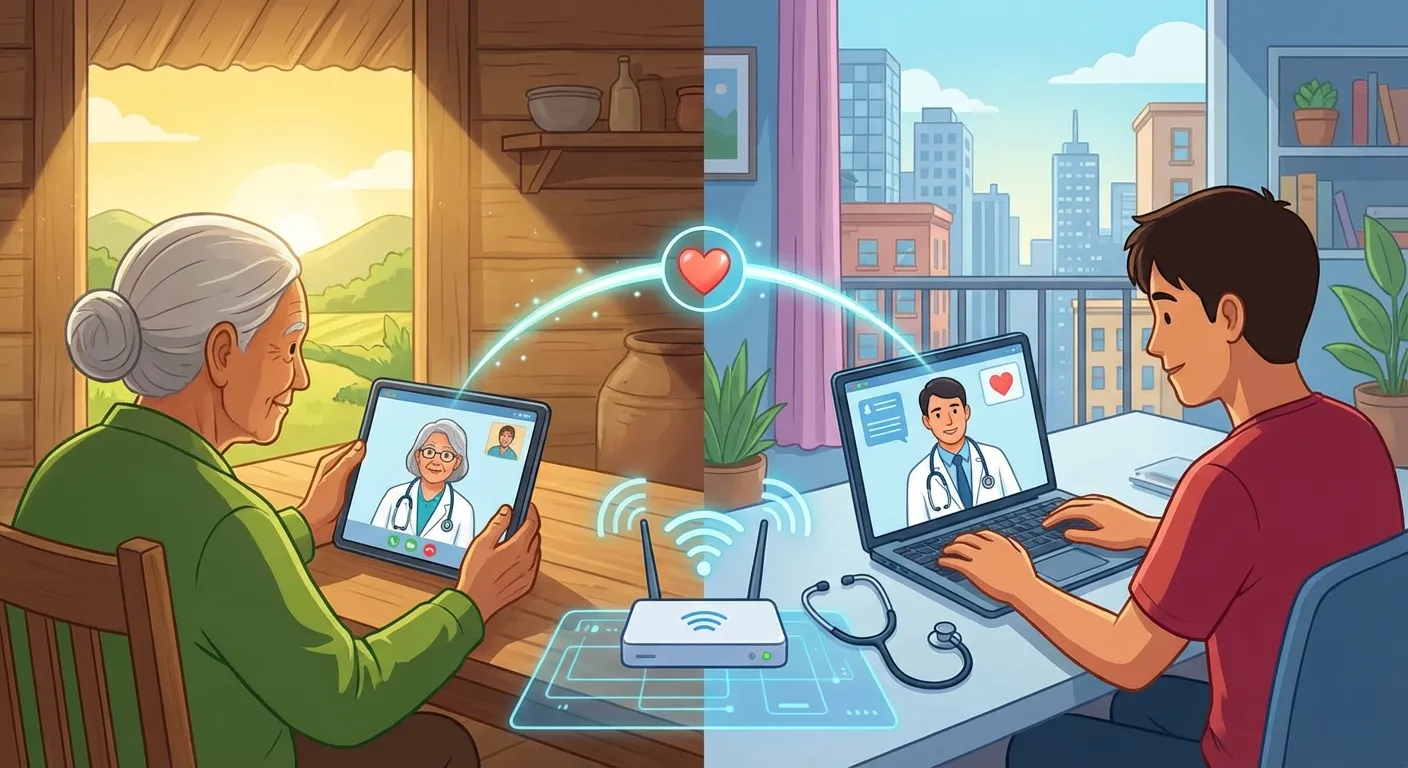
This is where online telemedicine completely solves the accessibility problem.
Why Online Medical Certificates Work for Spain
Same-Day or Next-Day Issuance: Reputable Spanish telemedicine providers guarantee Parte de Baja issuance within 24 hours, often same-day if requested before 5 PM.
No Appointment Queue: You don't wait weeks. You complete a form and have a consultation within hours.
Legally Identical: A Parte de Baja issued by a registered doctor (médico colegiado) through telemedicine is completely identical in legal standing to one from your GP. Social Security and your employer cannot distinguish or discriminate based on whether it came from telemedicine.
Affordable: Online providers typically charge €25-50 for a Parte de Baja—roughly half the cost of private clinic visits.
Fully Compliant with April 2023 Changes: Online doctors transmit the certificate electronically to Social Security just like traditional doctors. You still need to notify your employer, but the official documentation is handled digitally.
Employer-Friendly Process:
- Delivered via email instantly
- Often includes verification code or QR code
- Can be printed or forwarded electronically
- Meets all Spanish legal requirements
How Online Parte de Baja Services Work in Spain
The typical timeline is 2-4 hours:
- Complete medical questionnaire (5 minutes): Describe your illness, symptoms, duration, current status
- Provide supporting information (10 minutes): Upload ID, optionally a brief video describing symptoms
- Pay online (2 minutes): €25-50 depending on provider
- Doctor reviews your case (30 minutes - 2 hours): A registered Spanish doctor (médico colegiado) evaluates your information
- Receive Parte de Baja (instant to 24 hours): Official certificate arrives via email, ready to use
The doctor makes a real medical assessment:
- Won't issue certificates for implausible claims
- Won't certify you're incapacitated if you describe feeling well
- Will ask follow-up questions if something seems unclear
- May recommend you see your regular doctor if something concerning emerges
- Makes professional judgments about incapacity duration
They're more efficient than your GP not because they're less thorough, but because they're focused exclusively on this service without managing 30+ other patients that day.
Addressing Common Concerns About Online Certificates
"Isn't an Online Certificate Less Legitimate?"
Absolutely not. A Parte de Baja is valid if issued by any registered healthcare professional (médico colegiado), including:
- Public healthcare doctors
- Private doctors
- Telemedicine doctors
- Nurses in certain situations
- Occupational health physicians
The legitimacy comes from the doctor's registration with their professional college (Colegio de Médicos), not their physical location when issuing it.
"Will My Spanish Employer Accept It?"
Your employer must accept it by law. An employer who refused a Parte de Baja from a registered doctor would be violating Spanish employment law. If an employer raises unusual concerns, the certificate includes the doctor's registration number and credentials for verification.
"Isn't It Just Rubber-Stamping?"
No. Online doctors conduct genuine medical assessments. They won't:
- Issue certificates for health claims that are clearly false
- Certify incapacity if you describe being well
- Ignore concerning information suggesting something serious
What they do efficiently is eliminate the unnecessary friction of appointment scheduling, travel time, and waiting room delays—while maintaining medical responsibility.
"What If I'm Genuinely Still Too Sick After My Certificate Expires?"
The doctor evaluates whether your condition warrants extension. If you genuinely remain incapacitated, they'll either:
- Issue a renewal/extension of the Parte de Baja
- Recommend you contact your regular doctor for ongoing management (some incapacities extend beyond what's practical for initial online assessment)
- Suggest emergency evaluation if something more serious seems possible
The certificate reflects your actual medical status—not just permission to miss work.
Preventing This Situation: Getting Ahead of Requirements
Option 1: Contact Your Doctor Early
Once it's clear you'll be absent more than 2-3 days:
- Call your GP and explain you may need a Parte de Baja
- Ask about rapid appointment availability
- Some centers have express or same-week options
- Explain you need it urgently to your doctor
This gets you on the list early rather than requesting emergency service.
Option 2: Use Occupational Health Services (If Available)
Some larger employers in Spain offer occupational health services (servicios de salud ocupacional). These are ideal because:
- Typically same-day or next-day service
- Free to the employee (employer pays)
- Familiar with your job requirements
- Can make tailored workplace accommodation recommendations
If your employer offers this, it's your fastest option.
Option 3: Keep Telemedicine Contacts Ready
Know your telemedicine options before you need them:
- Have provider contact information saved
- Know which providers serve your region
- Understand their pricing structure
- This prevents panic when you suddenly need documentation
When Medical Certificates Serve Beyond Just Justifying Absence
Understanding additional purposes helps you appreciate the system's actual value.
Certificates Support Your Return-to-Work Process
A Parte de Baja stating "may work with modifications" or "partial work recommended" is actually powerful support for gradual return. It allows:
- Phased return with reduced hours initially
- Modified duties temporarily
- Specific workplace accommodations
- All officially documented (not depending on manager goodwill)
This is valuable if returning to full duties immediately would delay recovery.
Certificates Protect You Legally
If your employer later treats you negatively and claims you had "absence problems," the documented Parte de Baja proves your absences were medically legitimate. This is crucial legal protection.
Certificates Enable Benefits Claiming
Without documented Parte de Baja, claiming extended benefits like:
- Permanent Incapacity (Incapacidad Permanente)
- Disability support
- Related Social Security benefits
...becomes much harder. The Parte de Baja creates an official health record.
What to Do If You Need a Medical Certificate Right Now
If you're in a situation where:
- You've been absent 4+ days
- Your employer is requesting documentation
- You need to return to work or access benefits
Step 1: Assess Your Options (Same Day)
- Call your doctor and ask about urgent availability
- Contact your employer's occupational health service if available
- Identify a telemedicine provider if you need faster service
Step 2: Obtain the Certificate (Same Day to 24 Hours)
- Book with your chosen provider
- Complete the medical questionnaire honestly
- Pay for the service
- Receive Parte de Baja via email
Step 3: Notify Your Employer (Immediately)
- Tell your manager/HR you're off sick and approximate duration
- Share the certificate once you have it (even though it goes to Social Security electronically)
- Coordinate your return date based on medical recommendations
Step 4: Keep Your Copies (For Your Records)
- Save the Parte de Baja digitally
- Print a physical copy
- Maintain your records
Why This Makes Sense in 2025 Spain
Spain's healthcare system is evolving. While public healthcare remains fundamental, telemedicine is increasingly recognized as legitimate for:
- Routine medical needs
- Quick certifications
- Non-emergency assessment
- Documentation that doesn't require physical examination
When you need certification of an illness you already know about and are experiencing, telemedicine is:
- Faster (24 hours vs. 2-3 weeks)
- As legally valid (registered Spanish doctors)
- More affordable (€25-50 vs. €80-150)
- Equally professional (genuine medical assessment)
Key Takeaways
- Your Spanish employer requiring a Parte de Baja after 3 days is not unreasonable—it's Spanish employment law protecting both of you
- The real problem is healthcare access delays, not the requirement itself
- Online telemedicine solves the accessibility problem with same-day certificates from registered Spanish doctors
- Online Parte de Baja documents are completely legitimate legally—no employer can discriminate based on source
- Getting documentation early prevents workplace friction and ensures proper salary/benefits processing
- Recent changes (April 2023) made the process more digital and efficient—employers no longer receive physical documents
- This is routine, normal healthcare administration—not a sign of distrust in you
The solution to administrative friction around medical documentation isn't resenting the requirement—it's accessing documentation quickly and efficiently. That's precisely what online telemedicine enables.
When you need to return to work, your Parte de Baja should facilitate that process, not obstruct it. Choose services that prioritize speed, legal compliance, and genuine medical assessment—and you transform a bureaucratic concern into a straightforward administrative step.