What to Eat When You Have Traveller's Diarrhea: Complete Guide for Travellers
Comprehensive nutrition guide for traveller's diarrhea recovery: learn what to eat and avoid, hydration strategies, timeline for reintroducing foods, and how to prevent diarrhea while travelling.
Dr. Nathan Pierce
Medical Professional
Understanding Traveller's Diarrhea: Why It Happens and How Diet Helps Recovery
Traveller's diarrhea is the most common medical ailment affecting international travellers, striking 20–60% of those visiting developing countries. It's caused by consuming food or water contaminated with bacteria (most commonly Enterotoxigenic E. coli), viruses, or parasites that your home digestive system isn't adapted to handle.
The illness itself is rarely dangerous—most cases resolve within 3–5 days without specific treatment. However, the rapid fluid loss causes severe dehydration, electrolyte imbalance, and weakness that can derail your travel plans entirely. Your recovery depends critically on two factors: aggressive hydration and strategic nutrition that your compromised digestive system can tolerate.
The biggest mistake travellers make is either not eating at all (fearing it will worsen symptoms) or eating inappropriately (heavy, spicy, or high-fat foods that the gut cannot process). Both approaches delay recovery. The right approach is eating strategically chosen foods that provide calories and nutrients while being gentle on your damaged digestive lining.
The Acute Phase: First 24–48 Hours
This is when symptoms are most severe—frequent loose stools, urgency, cramping, and often nausea or low-grade fever. Your priority is surviving this acute window with minimal fluid loss.
Hydration: The Foundation of Recovery
This cannot be overemphasised: hydration is more important than food during the first 24–48 hours. Diarrhoea causes rapid loss of water and electrolytes (sodium, potassium, chloride, glucose). If you become severely dehydrated, you'll need hospital IV rehydration—something you want to avoid while travelling.
Oral rehydration solution (ORS) is superior to water alone. Why? Water alone doesn't contain electrolytes, so your dehydrated body doesn't retain it efficiently. ORS contains the precise balance of sodium, glucose, and potassium your body needs to maximise fluid absorption in your intestines.
Recommended hydration approach:
Oral rehydration salts (ORS sachets):
- Take one after each loose bowel movement
- Contains optimal sodium-to-glucose ratio (usually 1:1 or close to it)
- Available in most pharmacies worldwide; bring sachets with you
- Popular brands: WHO/UNICEF ORS, Dioralyte, Gastrolyte
- Cost-effective and lightweight to pack
- Mix with purified/bottled water (not tap water unless locally trusted)
Commercial sports drinks (partial alternative):
- Electrolyte drinks like Gatorade, Lucozade, or local equivalents
- Less optimal salt-to-glucose ratio than medical ORS but acceptable
- Often more palatable than ORS (which some find very salty)
- Dilute 1:1 with water if too concentrated (too much sugar can worsen diarrhoea)
Other fluids acceptable during acute phase:
- Water: Yes, but not your only fluid source; alternate with ORS
- Clear broths or soups: Provide salt and some calories without fat
- Weak tea (decaffeinated): Provides fluids; avoid caffeine (worsens dehydration)
- Flat, decaffeinated soft drinks: Acceptable but sports drink preferable
Fluids to absolutely avoid during acute phase:
- Caffeine (coffee, strong tea, caffeinated cola): Increases urine output, worsening dehydration
- Alcohol: Dehydrating and irritating to inflamed gut
- Milk or dairy drinks: Lactose intolerance worsens diarrhoea temporarily
- High-sugar drinks: Can worsen diarrhoea through osmotic effect
- Carbonated drinks (unless flat): Bubbles can cause cramping
Practical hydration strategy:
- Drink small, frequent amounts (200-250ml/7-8 oz every 15-30 minutes) rather than large amounts
- Sipping slowly is absorbed better than gulping
- After each loose bowel movement, drink at least 200ml of fluid
- Aim to drink until your urine is pale yellow (sign of adequate hydration)
- Keep drinking even if you feel like vomiting—small sips often stay down better than large volumes
Foods During Acute Phase (First 24–48 Hours)
The honest truth: during the worst acute phase, you may not feel hungry or be able to tolerate much food. That's acceptable. Your priority is hydration. However, if you can tolerate food, choosing wisely accelerates recovery.
Foods well-tolerated during acute phase:
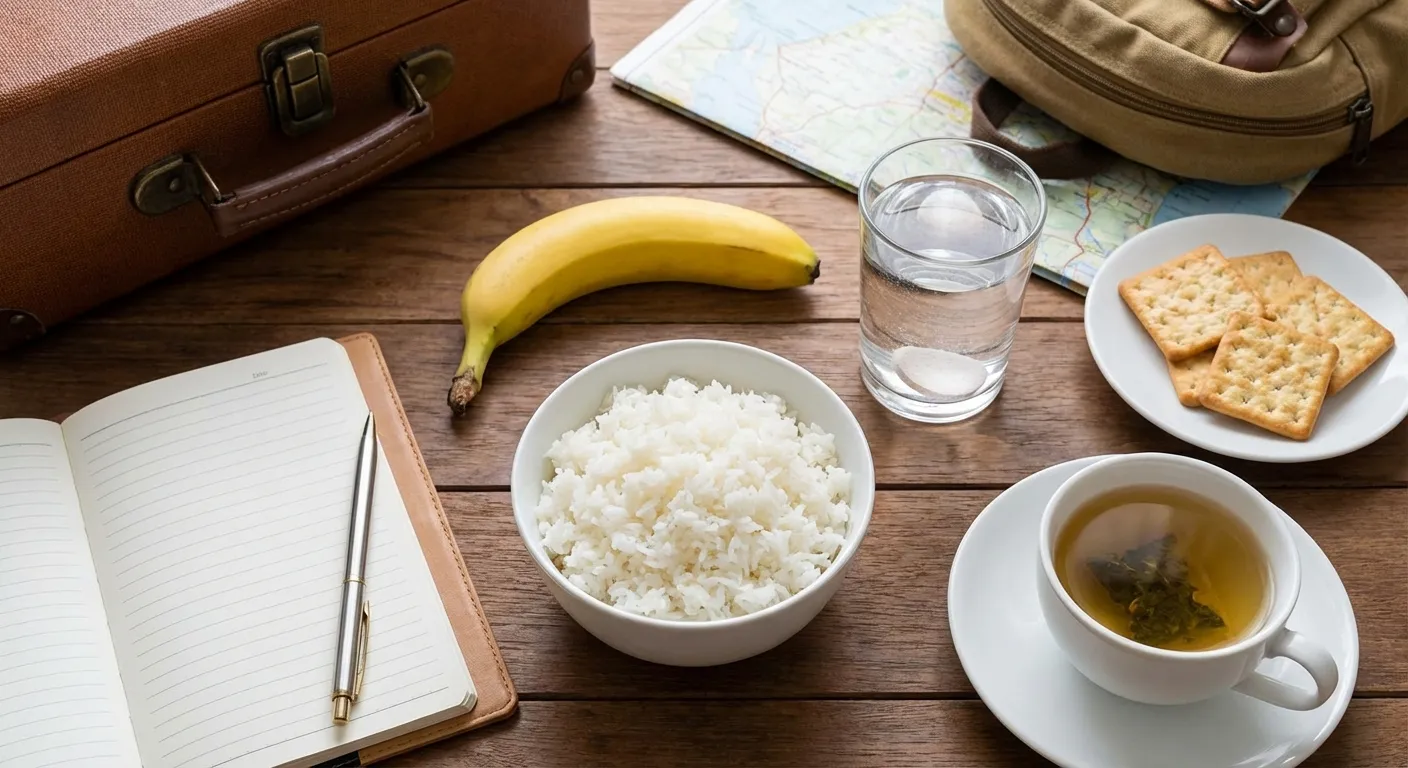
Crackers (plain, unsalted or lightly salted):
- Small, bland, easy to digest
- Provide carbohydrates for energy
- Saltine crackers particularly good (salt replacement)
- Eat a few at a time, not full sleeves
- Excellent foods to have with you or purchase locally
Plain white toast or dry bread:
- Very gentle on gut
- Provides starch and calories
- Avoid butter or spreads initially
- Plain is key—no jam, cheese, or rich toppings
Bananas (ripe):
- High in potassium (lost through diarrhoea)
- Contain resistant starch that helps firm stools
- Easy to eat when appetite is low
- Easily available worldwide
- Bring your own or purchase locally (usually safe fruit)
White rice (plain, no added fat or spices):
- Easy to digest
- Provides carbohydrates
- Eat small portions
- No oil, butter, or sauce
Applesauce (unsweetened, when available):
- Easy to digest
- Provides carbohydrates and some electrolytes
- Check expiry dates on packaged versions
- Avoid high-sugar varieties
Clear broths or light soups (chicken, vegetable):
- Provide both fluids and salt
- Calories without fat
- Warm or cool depending on what feels tolerable
- Avoid spices, garlic, or cream-based soups
Preference order for acute phase: ORS + frequent small sips of acceptable fluids is the primary focus. If hungry, add plain crackers, toast, or banana. Most people in acute diarrhoea won't feel hungry for 24-48 hours anyway.
What to Absolutely Avoid During Acute Phase
High-fat or oily foods:
- Accelerates intestinal transit, worsening diarrhoea
- Difficult for inflamed gut to process
- Includes fried foods, rich meats, creamy sauces, butter
Spicy foods:
- Irritates inflamed digestive tract
- Increases cramping and urgency
- Particularly problematic when diarrhoea is severe
Dairy products (most):
- Temporarily triggers lactose intolerance (acute diarrhoea damages lactase-producing cells)
- Milk, cheese, ice cream all problematic
- Exception: Plain yogurt with live cultures (probiotics) sometimes tolerated; introduce later in recovery
High-fibre foods:
- Whole grains, vegetables, fruits (except banana/applesauce)
- Increases bowel motility and stool volume
- Save fibre for recovery phase
Large meals:
- Overwhelms already-compromised digestion
- Eat small portions frequently (every 2-3 hours) rather than three meals daily
Foods difficult to digest:
- Red meat or tough proteins
- Processed foods with additives
- Anything unfamiliar that might cause additional digestive stress
Caffeine and alcohol:
- Both dehydrating and gut-irritating
- Worsen diarrhoea symptoms
- Delay recovery
The Early Recovery Phase: Days 2–4
By day 2–3, most people start improving. Stool frequency decreases, cramping lessens, and appetite begins returning. This is when dietary progression becomes critical—you need to reintroduce nutrients without re-triggering symptoms.
Progression Strategy
Don't return to normal diet immediately. Think of your gut as healing from injury. You wouldn't run a marathon on crutches; similarly, your intestinal lining needs gradual re-adaptation.
Day 2–3 approach (if improving):
Continue ORS as your primary fluid but can drink more plain water between ORS drinks. Add foods from the "Well-Tolerated" list:
- Plain crackers and toast (expand portions slightly)
- Bananas
- White rice
- Applesauce
- Plain potatoes or boiled potatoes
- Plain pasta (no sauce)
- Eggs (scrambled or boiled, not fried)
- Plain chicken or turkey (boiled or baked, no skin or sauce)
Key principle: Still bland, still plain, still small portions. But you can now introduce some protein (eggs, plain chicken) and slightly expand portions.
Meal structure:
- Continue small, frequent meals (4-6 small meals rather than 3 large ones)
- Example day: Crackers + banana for breakfast, plain toast at mid-morning, small bowl rice + scrambled egg for lunch, banana for afternoon snack, plain boiled chicken + rice for dinner
Foods to Introduce Cautiously Around Day 3–4
If symptoms continue improving, gradually add:
Vegetables (soft, plain):
- Boiled carrots
- Cooked celery
- Boiled potatoes (plain, no skin)
- Avoid raw vegetables still—too much fibre for healing gut
- No spices or salt yet, though small amounts of plain salt acceptable
Proteins (expanding beyond eggs/plain chicken):
- Plain boiled fish
- Lean ground turkey
- Avoid beef initially—harder to digest
- No skin, no sauces, no seasoning
- Small portions (3-4 oz)
Grains (introducing variety):
- Plain oatmeal (mild fibre, well-tolerated)
- Bland cereals (cream of wheat, plain corn flakes)
- Introduce whole grain toast as you improve (white bread remains safer initially)
Fruits (expanding cautiously):
- Beyond banana: applesauce, canned peaches or pears (in light syrup, drained)
- Avoid citrus initially—acidity can be irritating
- Avoid high-fibre fruits like pears and raspberries initially
Important Warning Signs Not to Progress
If you experience any of these while trying to progress your diet, revert to the acute phase diet immediately:
- Cramping increases
- Diarrhoea frequency increases
- Sudden nausea or vomiting
- Fever returns or increases
- Blood or mucus in stools
These suggest your gut isn't ready for progression. Slow down. You're not "failing"—your gut is just recovering more slowly than expected.
The Recovery Phase: Days 4–7+
By day 4–5, most travellers with uncomplicated diarrhea feel dramatically better. Stool frequency normalises to 1–2 times daily, cramping mostly resolves, and appetite returns. This is when you can begin more normal eating—though still with some caution.
Expanding Your Diet
Now reintroducing foods to rebuild nutrition:
Vegetables (cooked still preferable):
- Steamed broccoli, green beans, carrots
- Raw vegetables acceptable if tolerance is good
- Start with easier vegetables (lettuce, cucumber) before high-fibre ones (whole grains, legumes)
Proteins (increasing variety and portion):
- Continue plain chicken, fish, turkey
- Can introduce leaner beef (8 oz portions)
- Add beans/legumes very gradually (may cause gas initially)
- Eggs, yogurt with live cultures
Dairy (reintroducing carefully):
- Yogurt with live cultures (probiotics help restore gut bacteria): Start with small servings (150ml/5 oz) and increase
- Cheese (mild, small portions) if tolerated
- Milk still potentially problematic; most people tolerate it by day 5-6 but some remain lactose-intolerant temporarily
- Try milk in small amounts and monitor; avoid if worsens symptoms
Grains (expanding variety):
- Brown rice and whole grains now acceptable
- Whole grain bread, bran cereals
- Pasta dishes with light sauces
- Oats, barley
Fruits and vegetables:
- Can now eat most fruits and vegetables
- Raw vegetables acceptable
- High-fibre fruits acceptable if digestion is stable
Fats (reintroducing judiciously):
- Small amounts of olive oil, butter now acceptable
- Avoid fried foods still
- Keep portions modest
Foods to Continue Avoiding Longer-Term
Even as you improve, some foods remain problematic:
Caffeine (5+ days): Still somewhat irritating; continue limiting for 7-10 days post-illness
Alcohol: Continue avoiding for at least 7-10 days; delays full recovery
Fatty or fried foods: Continue limiting even in week 2; gut fat-processing returns gradually
Very spicy foods: May be temporarily more irritating; reintroduce cautiously after day 7
High-fibre foods (extreme amounts): Normalise fibre intake gradually over week 2
Special Dietary Considerations: Probiotics and Prebiotics
Probiotics: Do They Actually Help?
What are probiotics? Live beneficial bacteria (Lactobacillus, Bifidobacterium species) that support gut health.
Evidence on probiotics for traveller's diarrhea:
- For prevention: Weak evidence. Some studies show modest benefit; others show none. Reasonable to take pre-travel (won't hurt), but don't expect dramatic protection.
- For treatment: Stronger evidence. Studies suggest certain probiotic strains (particularly Lactobacillus rhamnosus GG, Saccharomyces boulardii) reduce diarrhoea duration by 1-2 days.
- Practical approach: If you have a high-quality probiotic powder or supplement, taking it daily during traveller's diarrhea doesn't hurt and may help. Start conservatively (half-dose) as probiotics can initially cause bloating.
Practical probiotic sources:
- Yogurt with live cultures: Safest, most accessible. Start day 3-4 post-illness
- Kefir: Probiotic dairy drink; tolerated well by many
- Sauerkraut/kimchi: Fermented vegetables with probiotics; introduce gradually day 4+
- Probiotic supplements: Powder or capsule forms; bring from home if concerned about quality
- Kombucha: Fermented tea drink; some people tolerate it, others find it too acidic when recovering
Prebiotics: Feeding Your Good Bacteria
What are prebiotics? Dietary fibres that feed beneficial gut bacteria, helping them proliferate.
Prebiotic foods to reintroduce:
- Onions, garlic, asparagus (introduce days 4-5)
- Bananas (you've probably been eating these anyway)
- Oats and whole grains (day 4+)
- Beans and legumes (introduce conservatively day 5-6)
- Apples and berries (day 4+)
Important: Introduce prebiotic fibres gradually, as sudden high-fibre intake can cause bloating and cramping. Spread introduction over several days.
Timeline for Full Recovery: What to Expect
Days 1–2 (Acute phase):
- Focus: Hydration with ORS + fluids, minimal food
- Symptoms: Frequent urgent diarrhoea, possible fever, nausea
- Expected: Miserable but manageable
Days 3–4 (Early recovery):
- Focus: Continue hydration, introduce bland foods, increase bland protein/carbs
- Symptoms: Stool frequency decreasing, cramping improving
- Expected: Appetite returning, feeling significantly better
Days 5–7 (Late recovery):
- Focus: Gradual diet normalisation, reintroduce vegetables/fruits/dairy
- Symptoms: Mostly resolved; occasional urgency but otherwise normal
- Expected: Return to mostly normal activities possible
Week 2:
- Focus: Complete diet normalisation, probiotics/prebiotics established
- Symptoms: Completely resolved in most people
- Expected: Back to normal travel itinerary
Important note: Some people recover in 3 days; others take 7-10. Individual variation is normal. Persistent diarrhea beyond 10 days suggests something other than typical traveller's diarrhea (possibly giardia or other parasite) requiring medical evaluation.
Prevention: Avoiding Traveller's Diarrhea Entirely
Prevention is always better than recovery. While no method is 100% effective, these strategies dramatically reduce risk.
Food Safety While Travelling
Eat only foods that are:
- Hot and freshly cooked: Bacteria killed by heat; avoid food kept warm for hours
- Completely cooked: Undercooked or raw foods carry risk
- From reputable establishments: Restaurants with high turnover and visible hygiene standards preferred
- Freshly peeled: Fruits you peel yourself safer than pre-peeled items
Avoid:
- Uncooked vegetables and salads: Higher contamination risk (especially in developing countries)
- Shellfish and raw fish: Sushi, ceviche, oysters carry significant risk
- Street food from questionable vendors: Yes, this is travel experience, but risk is real
- Food kept at room temperature: Bacterial growth occurs rapidly in warm climates
- Unpasteurised dairy: Potential for pathogen presence
Water Safety
Safest options:
- Bottled water: Sealed bottles from reputable brands
- Boiled water: Particularly in accommodation
- Purified water: From reputable water filtering systems (SteriPen, LifeStraw)
Avoid:
- Tap water: Even in developed countries, your home microbiome is adapted to your home water; travel water is different
- Ice: Usually made from tap water
- Brushing teeth: Use bottled water, not tap
Pre-travel Preparation
Probiotic supplementation: Start 2 weeks before travel, continue during and 1 week after. Does reduce risk modestly (15-20% in studies).
Bismuth subsalicylate (Pepto-Bismol): Evidence shows 65% reduction in traveller's diarrhea risk if taken prophylactically. Cautions: 4 doses daily (inconvenient), can cause black stools and tinnitus, not suitable for those with aspirin sensitivity.
Prophylactic antibiotics: 90% effective but CDC/most authorities don't recommend for all travellers due to antimicrobial resistance concerns. Only consider for high-risk individuals (immunocompromised, severe comorbidities, very high-risk destinations).
Handwashing and hygiene:
- Wash hands before eating: Single most effective prevention
- Hand sanitiser: Acceptable when handwashing unavailable (70% alcohol)
- Avoid touching face before hand hygiene
When to Seek Medical Help
Contact your doctor or seek urgent care if:
- Diarrhoea lasts beyond 10 days
- Diarrhoea contains blood or looks like "rice water" (suggests cholera or severe infection)
- High fever (38.5°C+) develops
- Severe dehydration signs: extreme thirst, minimal urination, dizziness, confusion
- Severe abdominal pain beyond cramping
- Signs of allergic reaction (rare) to antibiotics if prescribed
- You're immunocompromised or have significant comorbidities (seek help earlier)
Likely treatments if you see doctor:
- Loperamide (Imodium): Reduces diarrhoea frequency; symptomatic treatment
- Antibiotics: For bacterial traveller's diarrhea; reduces duration by 24-48 hours if started early
- IV hydration: Only if severely dehydrated and unable to drink
Key Takeaways
- Hydration is primary; food is secondary during acute phase—focus on ORS and fluids for first 48 hours
- The BRAT diet has been modernised—current evidence supports earlier nutritional rehabilitation with broader food variety
- Progress diet gradually: Small frequent meals of bland foods first, then progression toward normal diet by day 4-5
- Probiotics help: Particularly certain strains; yogurt from day 3-4 onwards supports recovery
- Avoid the worst offenders: Spicy, fatty, high-fibre, dairy, caffeine, alcohol throughout recovery
- Prevention through food/water safety is most important: Proper handwashing and careful food selection reduce risk 50-80%
- Complete recovery expected: Most people fully recover within 5-7 days with appropriate management
- Most traveller's diarrhea requires no antibiotics; symptomatic management and hydration are primary treatments
Traveller's diarrhea doesn't have to derail your trip. With strategic hydration, appropriate foods, and gradual diet progression, you can recover within a week and resume your travels. Bring ORS sachets, follow this guide, and you'll manage whatever your digestive system encounters abroad.