Jellyfish Stings While Travelling: Symptoms, Treatment, Prevention and When to Seek Medical Advice
Complete guide to jellyfish stings for travellers: understand symptoms, learn evidence-based first aid treatment, discover effective prevention strategies, and know when emergency care is needed.
Dr. Louise Morrison
Medical Professional
Understanding Jellyfish: The Ocean's Accidental Threat
Jellyfish are ancient marine creatures that have drifted in Earth's oceans for over 500 million years—far longer than dinosaurs roamed the planet. Despite their simple, almost passive appearance floating through water, they're actually equipped with one of nature's most sophisticated defence mechanisms: thousands of microscopic stinging cells capable of injecting venom within milliseconds.
Most jellyfish are harmless and don't intentionally sting humans. They're not aggressive predators seeking conflict with swimmers. Rather, jellyfish rely on their tentacles to capture tiny plankton and small fish—and they sting humans only when accidentally brushed against or when disturbed. Unfortunately, this accidental contact happens frequently at popular swimming beaches, making jellyfish stings one of the most common marine-related injuries affecting travellers globally.
What makes jellyfish particularly concerning for beach holidays isn't that stings are usually dangerous—most aren't. Rather, it's that jellyfish sting unpredictably, they can affect large areas of skin, and a small percentage of stings cause severe medical emergencies. Understanding what to do after a sting and how to prevent one entirely can transform a potentially ruined holiday into a minor inconvenience.
How Jellyfish Stings Work: The Microscopic Reality
Understanding the mechanism of jellyfish stings is crucial because it fundamentally changes how you treat them effectively.
The Stinging Cell: Nature's Microscopic Weapon
Jellyfish tentacles contain specialised cells called nematocysts (also called cnidocytes). These cells are essentially biological syringes—thousands of them line each tentacle. When activated (typically by touch), nematocysts fire a microscopic harpoon-like structure that:
- Penetrates the skin with a sharp, hollow tip
- Injects venom directly into skin tissue or bloodstream
- Releases within microseconds, so quick you may not feel the initial puncture
These stinging cells are so sensitive they can be triggered by:
- Direct tentacle contact (most common)
- Brushing against barely-visible tentacle fragments floating in water
- Touching a jellyfish that has washed ashore (even dead jellyfish retain active stinging cells for hours after death)
- Sea lice, which are actually jellyfish larvae and can sting despite their microscopic size
Why Fresh Water Makes It Worse
This is critical: rinsing with fresh water is a common misconception that actually worsens jellyfish stings. Here's why:
Fresh water causes osmotic changes in the nematocyst cells. This osmotic shock triggers additional nematocysts to fire, releasing more venom into your skin. This is why the standard first aid worldwide recommends seawater or saline solution—not fresh water—for the initial rinse.
The Role of Tentacles and Venom Composition
Different jellyfish species vary dramatically in:
- Tentacle length: Portuguese man-of-war tentacles can extend 30+ metres
- Venom potency: Box jellyfish venom can cause severe systemic reactions; common jellyfish cause localised pain
- Stinging cell density: Some species have far greater concentrations of nematocysts
- Toxin composition: Venom varies in what systems it affects (local tissue, cardiovascular, nervous system)
This species variation matters because it means first aid recommendations aren't universally identical—though they largely converge around evidence-based interventions.
Jellyfish Species and Their Varying Severity: What You Need to Know
Different regions host different jellyfish species with dramatically different sting severity.
Most Common: Jellyfish and Bluebottle (Portuguese Man-of-War)
Geographic distribution: Mediterranean, Caribbean, Atlantic, Pacific
Typical sting characteristics:
- Local pain and welts (raised red lines or areas)
- Erythema (redness) and sometimes blistering
- Localised itching and burning
- Typically moderate pain
Severity: Mild to moderate. Most people recover within hours to days without medical intervention.
Special note on Portuguese man-of-war: This isn't technically a jellyfish (it's a siphonophore—a colonial organism), but commonly included in jellyfish sting guidance. Its tentacles can cause more extensive stings due to their length.
Box Jellyfish (Chironex fleckeri) - Australian Waters
Geographic distribution: Australian waters, particularly summer months (November-May)
Distinctive features: Cube-shaped body with tentacles hanging from corners; small (barely visible); found in Australian coastal waters
Sting characteristics:
- Rapid onset: Pain within seconds of contact
- Severe intensity: Described as the worst pain imaginable
- Local reaction: Severe welts, blistering, sometimes tissue necrosis
- Systemic reaction: Can include cardiovascular collapse, cardiac arrhythmias, respiratory failure
Severity: Potentially life-threatening. Untreated box jellyfish stings can cause death within minutes. The venom is extraordinarily potent.
Critical intervention: Antivenin is available and should be administered immediately for confirmed box jellyfish stings. Australia is the only country with specific box jellyfish antivenin.
Irukandji Syndrome - Australian Box Jellyfish
Geographic distribution: Australian coastal waters
Distinctive feature: These are small (often 5-10mm), virtually invisible in water, and deliver less immediate pain than major box jellyfish
Sting characteristics:
- Delayed symptom onset: 15-30 minutes after sting (unlike immediate box jellyfish pain)
- Muscle pain and rigidity: Severe back, abdomen, and muscle pain
- Cardiovascular effects: Rapid heart rate (tachycardia), high blood pressure (hypertension)
- Psychological symptoms: Anxiety, agitation, feeling of impending doom
- Systemic effects: Can include respiratory failure, cardiac arrhythmias
Severity: Can be life-threatening despite minimal initial pain. The delayed onset makes recognition challenging—swimmers may not realise they've been stung until severe systemic symptoms emerge.
Sea Lice - Jellyfish Larvae
Geographic distribution: Warm ocean waters worldwide
Distinctive features: Microscopic larvae, invisible to naked eye, often affect large body surface areas
Sting characteristics:
- Prickling sensation during or after swimming
- Itchy rash appearing minutes to hours after water exposure
- Distributed pattern: Often affecting areas under swimwear (where larvae are trapped against skin)
- Generalised itching: Can be severe and persistent
Severity: Mild to moderate. Usually self-limiting but can be intensely itchy.
Other Common Jellyfish Species
Most jellyfish encountered at tourist beaches (Mediterranean sea nettles, Caribbean jellyfish, etc.) cause:
- Local pain and irritation
- Welts or rashes
- Itching and burning
- Recovery within 24-72 hours without intervention
General rule: If you're not in Australian coastal waters, your jellyfish sting is unlikely to be life-threatening, though it may be painful and uncomfortable.
Recognising Jellyfish Sting Symptoms: The Spectrum of Severity
Immediate Local Symptoms (Within Minutes)
Pain: This is usually the first sensation. Intensity varies dramatically:
- Mild stings: Uncomfortable burning or prickling
- Moderate stings: Sharp, intense localised pain
- Severe stings (box jellyfish): Extreme, incapacitating pain
Visible skin reactions:
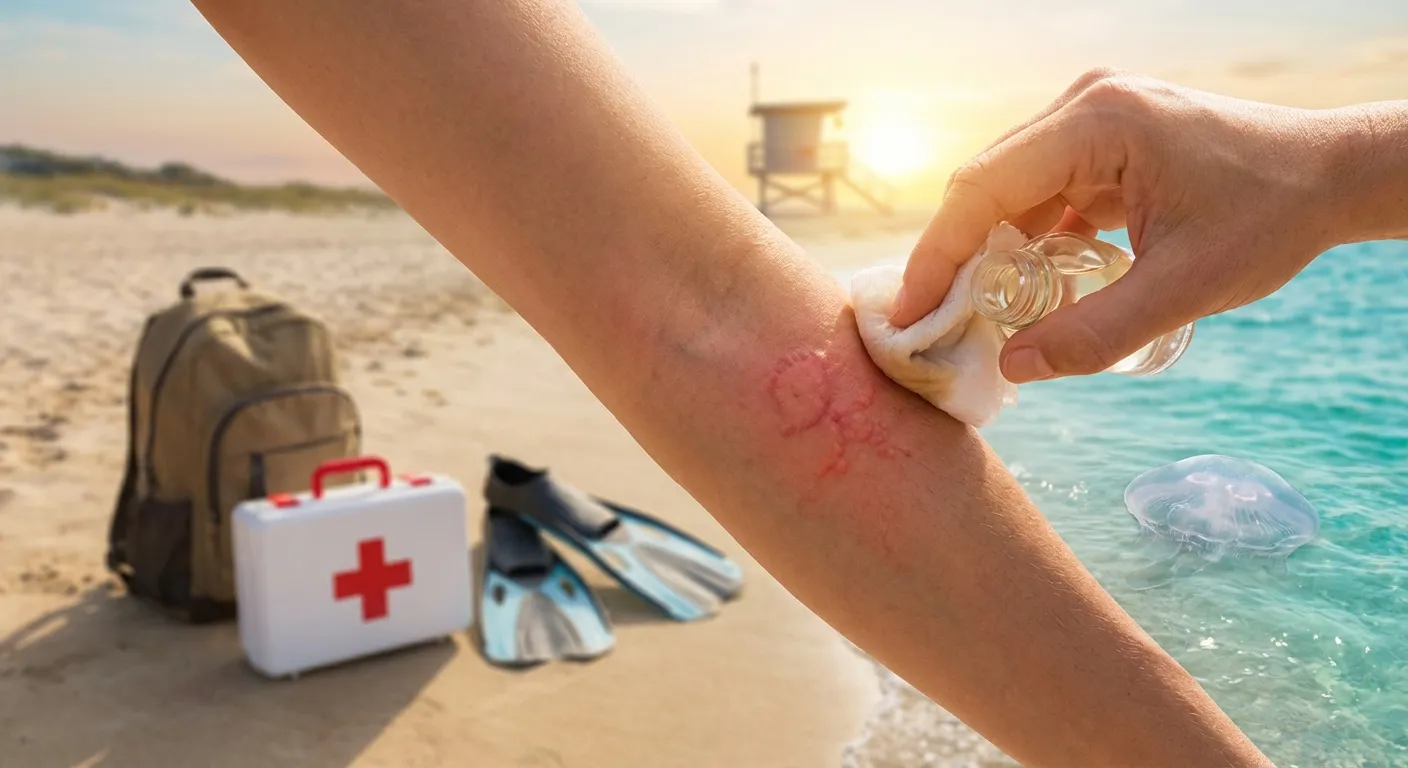
- Welts or linear marks: Red, raised patterns following tentacle contact
- Erythema: Generalised redness around sting area
- Blanching: Skin turning white under pressure, then returning to red
- Blistering: Fluid-filled blisters forming hours after sting
- Rash: Small red bumps or patchy distribution
Localised inflammation:
- Swelling around sting area
- Warmth to touch
- Itching or burning sensation
Intermediate Symptoms (Hours After Sting)
Rash progression: Initial welts may evolve into more extensive rashes or blistering
Systemic symptoms (affecting whole body):
- Nausea and vomiting: Particularly with stings covering large areas
- Headache: Ranging from mild to severe
- Muscle aches: Generalised body discomfort
- Fatigue: Unusual tiredness despite limited exertion
- Fever: Low-grade temperature elevation
Skin complications:
- Secondary infection signs (if rash is scratched or contaminated)
- Spreading redness beyond initial sting area
Delayed or Persistent Symptoms (Days to Weeks)
Post-inflammatory reactions:
- Itching: Can persist for weeks after initial sting
- Discoloration: Temporary pigmentation changes where sting occurred
- Scarring: In severe cases, permanent scarring can result
- Recurrent symptoms: Some people experience intermittent itching or rash recurrence
Systemic delayed reactions:
- Serum sickness-like reaction: Fever, joint pain, rash appearing days after sting
- Neurological symptoms: Rare but can include numbness or weakness
Severe and Life-Threatening Reactions: Warning Signs Requiring Immediate Care
While most jellyfish stings are harmless, certain presentations constitute medical emergencies.
Anaphylaxis/Severe Allergic Reaction
Symptoms (appearing within minutes):
- Difficulty breathing or wheezing: Suggests airway involvement
- Throat tightness or hoarseness: May indicate angioedema (throat swelling)
- Facial or lip swelling: Can progress to airway obstruction
- Shock symptoms: Rapid weak pulse, dizziness, loss of consciousness
- Profuse sweating: Signs of severe systemic reaction
- Gastrointestinal: Severe nausea, vomiting, abdominal pain
Action: Call 999 immediately. This requires emergency epinephrine injection (via EpiPen if available, or administered by paramedics).
Severe Systemic Toxicity (Box Jellyfish, Irukandji)
Box jellyfish systemic symptoms:
- Severe pain beyond local sting: Muscle spasms, chest pain
- Cardiac symptoms: Rapid or irregular heartbeat, palpitations, chest discomfort
- Respiratory distress: Shortness of breath, difficulty breathing
- Neurological symptoms: Confusion, loss of consciousness, seizures
- Rapid deterioration: Symptoms worsening by the minute
Irukandji syndrome:
- Severe muscle rigidity and pain: Particularly back and abdomen
- Hypertensive crisis: Severely elevated blood pressure
- Cardiac arrhythmias: Irregular or very rapid heartbeat
- Respiratory failure: Severe breathing difficulty
Action: Call 999 immediately or go directly to A&E. Box jellyfish require antivenin within hours for best outcome.
Large Area Stings
Even from normally harmless jellyfish:
- Sting covering more than one arm or leg entire front or back
- Multiple separate stings distributed across body
- Extreme local pain not responding to standard first aid within 2 hours
Why this matters: Large surface area stings increase venom load entering bloodstream, increasing systemic toxicity risk.
Action: Seek medical evaluation even if individual sting characteristics seem mild.
Sting Location-Specific Concerns
Face or eye stings:
- Risk of eye damage, vision impairment
- Facial swelling potentially affecting airway
- Immediate ophthalmological evaluation needed
Genital stings:
- Severe local pain due to sensitive tissue
- Risk of urinary complications
- Medical evaluation recommended
Throat or mouth stings:
- Risk of airway swelling
- Immediate medical attention essential
Action for location-specific stings: Seek medical evaluation urgently, particularly for face/throat/eye involvement.
First Aid for Jellyfish Stings: Evidence-Based Treatment
The following recommendations are based on systematic reviews of jellyfish sting treatment research and international consensus guidelines.
Immediate Actions (First Minutes)
Step 1: Exit the Water Safely
Move away from the jellyfish and other stinging tentacles:
- Don't thrash about (can cause additional stings)
- Walk calmly out of water
- Don't dive or roll around
- If another sting occurs in water, exit immediately
Step 2: Rinse with Seawater (Not Fresh Water)
This is critical and counterintuitive:
- Use seawater only for the initial rinse
- Pour seawater generously over affected area
- Continue rinsing for 15-30 seconds
- Do NOT use fresh water—this triggers more nematocyst firing
Why seawater? The salt concentration prevents osmotic activation of remaining nematocysts, preventing additional venom injection.
Step 3: Remove Visible Tentacle Fragments
- Wear gloves or use tweezers—don't use bare hands
- Remove tentacle pieces using fine tweezers, pinching carefully
- Alternatively, use the edge of a credit card or plastic scraper (gentle scraping motion)
- Place removed tentacles in a sealed bag or paper (still contain active stinging cells)
- Never touch tentacles directly with bare skin
Specific Treatment by Jellyfish Type
For Box Jellyfish Stings (Australian waters specifically):
- Apply vinegar immediately (5% acetic acid): Pour vinegar liberally on sting area, soaking tentacles for 30 seconds. Vinegar deactivates remaining stinging cells on skin.
- Remove tentacles using tweezers or card edge
- Apply ice packs (wrapped in cloth, not directly on skin): Reduces pain
- Seek emergency care immediately: Even if pain subsides, antivenin and monitoring are essential
For All Other Jellyfish Stings (Mediterranean, Caribbean, etc.):
-
Soak in hot water (43-45°C / 110-113°F): This is the most important pain relief intervention. Keep affected area immersed for 20-45 minutes, or until pain substantially improves.
- Use water that's hot but not scalding (you should tolerate immersion comfortably)
- A hot shower works if soaking isn't possible
- This temperature range inactivates venom proteins while remaining safe for skin
-
Take pain relief medication: While soaking, take paracetamol (500-1000 mg) or ibuprofen (400-600 mg) as needed
-
Apply hydrocortisone cream: After hot water treatment, apply 0.5-1% hydrocortisone ointment twice daily to reduce inflammation and itching
-
Antihistamine: If itching is significant, consider oral antihistamine (e.g., cetirizine 10 mg)
Treatments to AVOID
The following are ineffective or harmful and should NOT be used:
- Fresh water rinse: Triggers more stinging cells
- Ice directly on sting: Can increase pain; wrap ice in cloth for no more than 15 minutes
- Vinegar (except for Australian box jellyfish): Can worsen some sting types
- Urine: Ineffective myth with no scientific evidence
- Baking soda: Minimal evidence and potentially harmful
- Meat tenderiser: Ineffective
- Scraping or rubbing with towel: Irritates skin and triggers more stings
- Pressure bandages: Can worsen outcomes
- Alcohol or rubbing: Ineffective
- Ammonia or antiseptics: No benefit and potential harm
Critical point: Many home remedies persist due to anecdote and folk wisdom, but scientific evidence has consistently disproven them.
Managing Complications
Persistent Rash or Itching:
- Continue hydrocortisone cream
- Oral antihistamines (cetirizine 10 mg daily or similar)
- Keep area clean to prevent secondary infection
- Avoid scratching despite intense itching
Signs of Infection:
- Increasing redness beyond initial sting area
- Pus or discharge
- Warmth to touch
- Fever
If infection develops:
- Seek medical evaluation
- May require antibiotics if bacterial infection confirmed
- Clean wound three times daily with antiseptic
Severe Persistent Pain:
- If pain hasn't improved after 2 hours of hot water immersion
- Try extended hot water soaking (up to 45 minutes)
- Consider stronger pain relief (ibuprofen rather than paracetamol, if tolerated)
- Seek medical evaluation if pain remains severe
Prevention: Strategies to Avoid Jellyfish Stings
Prevention is always superior to treatment. The following strategies significantly reduce sting risk.
Before Your Beach Trip
Research jellyfish in your destination:
- Call ahead to beach authorities or lifeguard stations
- Check jellyfish apps (many Mediterranean and Australian beaches have real-time jellyfish alerts)
- Ask your accommodation about seasonal jellyfish presence
- Check weather—jellyfish are more common after certain wind patterns or in warm water conditions
Check warning flags:
- Beaches in jellyfish areas display warning flags or signs
- Red/purple flags typically indicate jellyfish presence
- Blue flags may indicate specific hazard warnings
- Ask lifeguards about current conditions
Physical Barriers: Most Effective Prevention
Protective suits:
- Wetsuits or rashguards: Even thin versions provide excellent protection. Jellyfish tentacles cannot penetrate fabric.
- Full-body swimsuits: Provide protection compared to swimming in minimal clothing
- Footwear: Water shoes or reef shoes protect feet when wading
Stingsuit/anti-jellyfish clothing:
- Specialised suits designed to prevent jellyfish stings (e.g., Safe Sea stingsuit)
- Work by reducing friction and preventing tentacle contact
- Worth investment for frequent tropical beach visitors
Chemical Protection
Safe Sea and similar products:
- Sunscreen containing jellyfish sting protection
- Contains compounds that prevent nematocyst firing
- Applied before entering water
- Requires reapplication after 2 hours or after towelling off
- Important: This is not 100% protection, but significantly reduces risk
- Effectiveness varies by jellyfish species
Behavioural Prevention
During water activities:
- Stay in designated swimming areas with lifeguard presence
- Never touch jellyfish on the beach, even dead ones
- Avoid areas with high jellyfish density: Ask lifeguards for current information
- Watch your children closely—their curiosity often leads to jellyfish contact
- Swim with groups: Increased chances of someone seeing jellyfish
- Avoid murky water: Can't see jellyfish or tentacles
Specific water conditions to avoid:
- After easterly winds: Often push jellyfish toward shore
- During warm water periods: Jellyfish thrive in warm temperatures
- Around sunset/sunrise: Some species more active during dim light
- In areas with high plankton blooms (water appears discoloured): Attracts jellyfish
Sea lice prevention:
- Change out of wet swimwear immediately after ocean swimming
- Shower and towel dry thoroughly to remove remaining larvae
- Avoid areas of warm water where sea lice are more common
- Consider protective suits if sea lice are common at your destination
Emergency Preparedness
Know the location of emergency services:
- Identify nearest lifeguard station
- Know location of nearest hospital
- Inform your accommodation of any medical allergies
Carry a basic marine sting kit:
- Tweezers (for tentacle removal)
- Vinegar (if visiting Australian waters)
- Thermometer (for verifying hot water temperature)
- Paracetamol or ibuprofen
- Antihistamine
- Hydrocortisone cream
- Plastic bags (for tentacle disposal)
Travel insurance check:
- Ensure your policy covers marine injuries
- Know your policy's emergency numbers
When to Seek Medical Advice: Your Decision Framework
Seek Urgent Medical Care (Go to A&E or Call 999) If:
Respiratory or cardiac symptoms:
- Difficulty breathing or wheezing
- Chest pain or tightness
- Rapid or irregular heartbeat
- Dizziness or fainting
Severe allergic reaction signs:
- Facial or throat swelling
- Loss of consciousness
- Signs of anaphylaxis (severe reaction)
Large area involvement:
- Sting covers more than one arm or leg
- Sting affects face, genitals, or mouth
Severe pain unresponsive to first aid:
- Severe pain persisting beyond 2 hours of hot water immersion
- Particularly if from box jellyfish
Systemic symptoms:
- Severe vomiting preventing fluid intake
- High fever (38.5°C+)
- Severe muscle rigidity or pain (suggests Irukandji)
Worsening symptoms:
- Sting progressively worsening rather than improving
- Spreading redness beyond initial area
Go to Minor Injuries Unit or See GP If:
Moderate symptoms:
- Moderate pain after hot water treatment
- Significant swelling or rash
- Persistent itching despite hydrocortisone
Complication signs:
- Signs of infection (spreading redness, pus, warmth)
- Secondary skin infection developing
- Sting not improving after 3-5 days
Location-specific concern:
- Any sting on or near eyes (needs eye drops/professional assessment)
- Sting in or near mouth/throat (risk of swelling)
- Genital area sting
Special populations:
- Young children (increased risk)
- Elderly (potentially higher complication risk)
- Immunocompromised individuals
Home Management Only If:
- Mild to moderate pain responding to hot water treatment
- Localised rash without systemic symptoms
- No signs of infection
- Symptoms improving progressively
- Pain manageable with over-the-counter medication
Special Considerations for Travellers
Travelling to Australian Waters
Critical awareness:
- Box jellyfish season: November-May (summer months)
- Swimming during stinger season risky without protective suits
- Many beaches closed during peak season
- Lifeguards trained specifically in box jellyfish management
Recommended precautions:
- Wear full protective wetsuit year-round
- Stick to beaches with lifeguards during season
- Consider non-swimming water activities (snorkelling on reef, wading in shallow water with protective footwear)
Tropical and Caribbean Destinations
Common jellies: Portuguese man-of-war, sea nettles, various scyphozoan jellyfish
Seasonal considerations: Jellyfish more common in warm water season
Recommended precautions: Protective suit, sunscreen with sting protection, awareness of warning flags
Mediterranean Destinations
Common species: Sea nettles, Rhopilema, occasionally Portuguese man-of-war
Seasonal pattern: More common in summer
Recommended precautions: Check conditions before swimming, protective suit optional unless stings reported
Travelling with Children
Increased risk: Children more likely to touch jellyfish
Prevention:
- Constant supervision in water
- Teach children not to touch jellyfish or wash-ups
- Consider protective suits for children
- Stay in guarded swimming areas
Dosing medications:
- Paracetamol: Based on child's weight
- Antihistamines: Age-appropriate formulations
- Consult local pharmacy if dosing uncertain
Recovery and Long-Term Effects
Timeline
Minutes to hours: Acute pain and visible reactions
Hours to days: Welts persist, itching begins, rash evolves
Days to weeks: Gradual improvement, potential for persistent itching
Weeks to months: Skin healing completes, potential for temporary pigmentation or scarring
Persistent Issues
Post-sting syndrome:
- Some individuals develop persistent symptoms (uncommon)
- Itching may continue for weeks despite apparent healing
- Intermittent reactions possible upon re-exposure
Scarring and pigmentation:
- Severe stings occasionally leave permanent marks
- More common with box jellyfish or large area stings
- Usually fade with time but can persist
Sensitivity:
- Repeated stings in same area may cause increased reaction
- Individuals previously stung sometimes develop heightened anxiety about water
Key Takeaways
- Most jellyfish stings are harmless and resolve with basic first aid within 24-48 hours
- Seawater rinse, not fresh water, is the critical first step to prevent additional nematocyst firing
- Hot water immersion (43-45°C) is the most effective pain relief intervention, far superior to ice
- Box jellyfish stings are rare but life-threatening—only relevant concern for Australian coastal swimmers
- Prevention through protective suits is most effective if you're concerned about stings
- Know your jellyfish: Species vary dramatically in sting severity
- Most home remedies don't work and many make things worse
- Seek emergency care for severe reactions (breathing difficulty, chest pain, large area stings, systemic symptoms)
- Location and timing matter: Research your destination's jellyfish situation before travel
- Travel insurance should cover marine injuries—verify before your trip
The vast majority of jellyfish stings don't derail beach holidays—they're temporary inconveniences manageable with basic first aid. Armed with this knowledge, you can enjoy coastal destinations confidently while knowing exactly what to do if you have the misfortune of an accidental sting.