Public ERs vs Private Clinics Spain: 2026 Cost & Wait Times
Compare Spanish public ER costs and wait times vs private clinics for tourists in 2026. Learn when to visit Urgencias and when to use a €39 online doctor.
Dr. Daniel Cuenca Leal
Colegiado nº 284627651 · Ilustre Colegio Oficial de Médicos de Madrid
Medically reviewed by Dr. Daniel Cuenca Leal · Updated June 21, 2026
Spanish Hospital Costs for Tourists: What to Expect in 2026
If you fall ill while visiting Spain, your first instinct might be to head to the nearest hospital. However, navigating the Spanish healthcare system as a non-resident can be confusing, time-consuming, and surprisingly expensive if you don't know the rules.
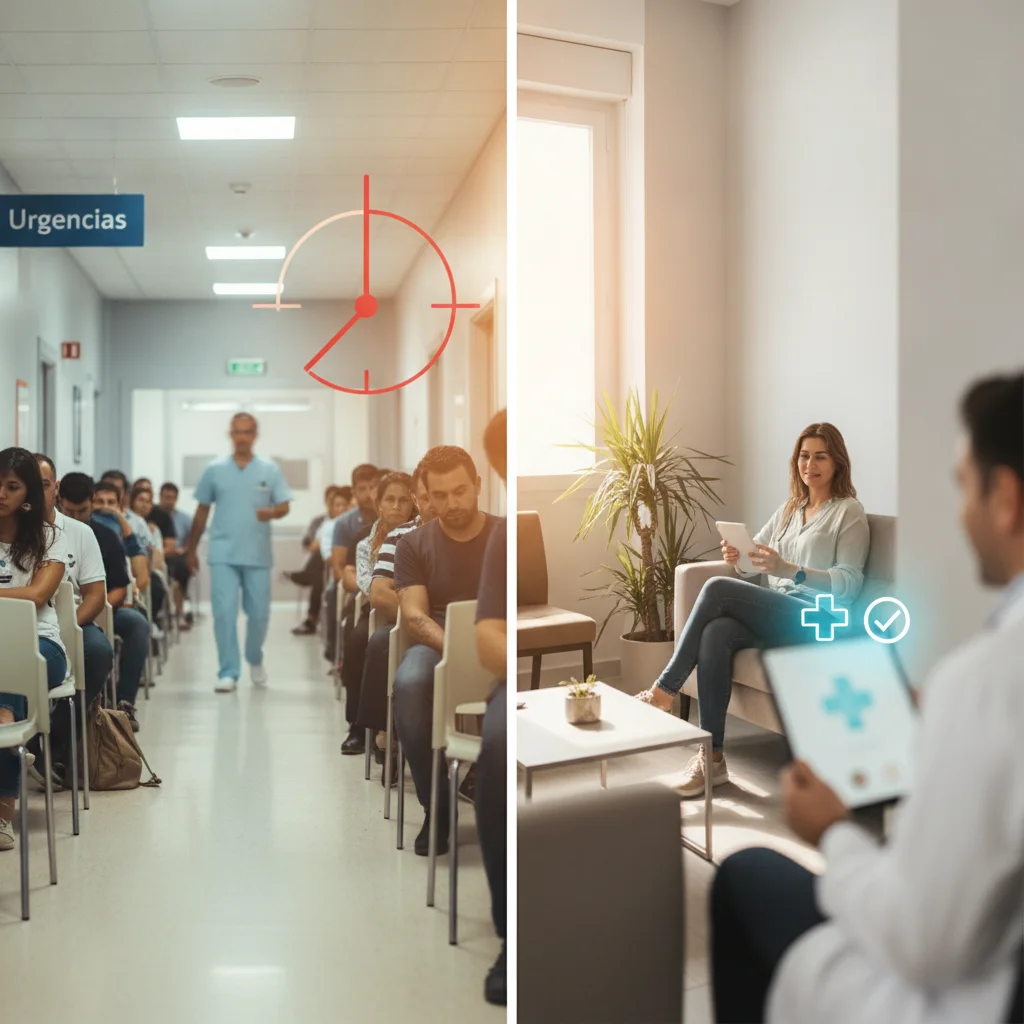
For tourists without a European Health Insurance Card (EHIC) or Global Health Insurance Card (GHIC), a basic visit to a Spanish public emergency room (Urgencias) typically costs around €150 to €250 out-of-pocket just for the initial consultation and triage. This baseline fee does not include blood tests, X-rays, specialist consultations, or prescription medications. Furthermore, you can expect to wait between 4 and 8 hours to be seen for non-life-threatening conditions. In stark contrast, a private online doctor consultation in Spain costs from €39, with wait times of under 15 minutes.
Understanding the critical differences between public ERs, private clinics, and modern telemedicine can save you hundreds of euros and salvage your precious vacation time.
The Reality of Public ER (Urgencias) Wait Times in Spain
Spain boasts an excellent public healthcare system (Sistema Nacional de Salud), frequently ranked among the best in the world by the World Health Organization (WHO). However, like many public health systems globally, it is heavily burdened, particularly during peak tourist seasons in coastal areas and major cities like Barcelona, Madrid, and Malaga.
The Manchester Triage System
Spanish emergency rooms operate on a strict medical triage system, typically the Manchester Triage System, which prioritizes patients based on the severity of their condition, not their time of arrival.
The triage levels are:
- Level 1 (Resuscitation - Red): Immediate life-saving intervention required (0 minutes wait).
- Level 2 (Emergency - Orange): Very urgent, potentially life-threatening (Target: < 10 minutes wait).
- Level 3 (Urgent - Yellow): Urgent but stable condition (Target: < 60 minutes wait).
- Level 4 (Standard - Green): Non-urgent conditions (Target: < 120 minutes wait).
- Level 5 (Non-urgent - Blue): Minor ailments that could be treated by a GP (Target: < 240 minutes wait).
If you visit a public ER with a non-life-threatening issue such as a urinary tract infection (UTI), traveller's diarrhoea, a minor sunburn, or a sore throat, you will be classified as Level 4 or Level 5.
In practice, during busy periods, the target times for Level 4 and 5 are rarely met. According to reports from the Spanish Ministry of Health, patients triaged as non-urgent frequently wait between 4 and 8 hours to see a doctor. You will spend your day in a crowded, uncomfortable waiting room surrounded by other sick individuals, losing a full day of your vacation.
Breakdown of Spanish Hospital Costs for Tourists
If you are an EU citizen with a valid EHIC, or a UK citizen with a valid Global Health Insurance Card (GHIC), emergency medical treatment in a public hospital is provided on the same terms as Spanish residents (usually free at the point of use).
However, if you are a non-EU tourist (e.g., from the US, Canada, Australia) or an EU/UK citizen who forgot their card, you will be billed as a private patient.
Estimated Public Hospital Costs (Uninsured/Non-EU)
- Initial ER Consultation & Triage: €150 – €250
- Basic Blood Tests: €50 – €100
- X-Rays: €70 – €150
- Specialist Consultation (e.g., Traumatologist): €150 – €300
- Overnight Hospital Stay (Ward): €500 – €800 per night
- Overnight Hospital Stay (ICU): €1,500 – €2,500+ per night
Note: These are average estimates based on 2025/2026 data from regional health authorities (Ministerio de Sanidad) which set their own tariffs.
Private Hospital and Clinic Costs
Private hospitals in Spain (such as Quirónsalud, Vithas, or HM Hospitales) offer shorter wait times but come with significantly higher price tags.
- Private ER Consultation: €200 – €400
- Private Walk-in Clinic Consultation: €80 – €150
While travel insurance will eventually cover these costs, you are often required to pay upfront and claim the money back later. Furthermore, many standard travel insurance policies have an excess (deductible) of €50 to €100, meaning you still pay a significant portion out-of-pocket for minor ailments.
2026 Wait-Time and Cost Comparison Table
| Healthcare Option | Average Wait Time | Estimated Cost (Uninsured) | Best For |
|---|---|---|---|
| Public ER (Urgencias) | 4 to 8 hours | €150 – €250+ | Severe trauma, chest pain, life-threatening emergencies |
| Private Hospital ER | 1 to 3 hours | €200 – €400+ | Urgent care with premium private travel insurance |
| Private Walk-in Clinic | 45 to 90 minutes | €80 – €150 | Minor injuries requiring physical examination |
| UrgentDoc (Telemedicine) | < 15 minutes | €39 | Common infections, prescriptions, minor illnesses |
The Telemedicine Alternative: 15-Minute Wait, €39 Baseline
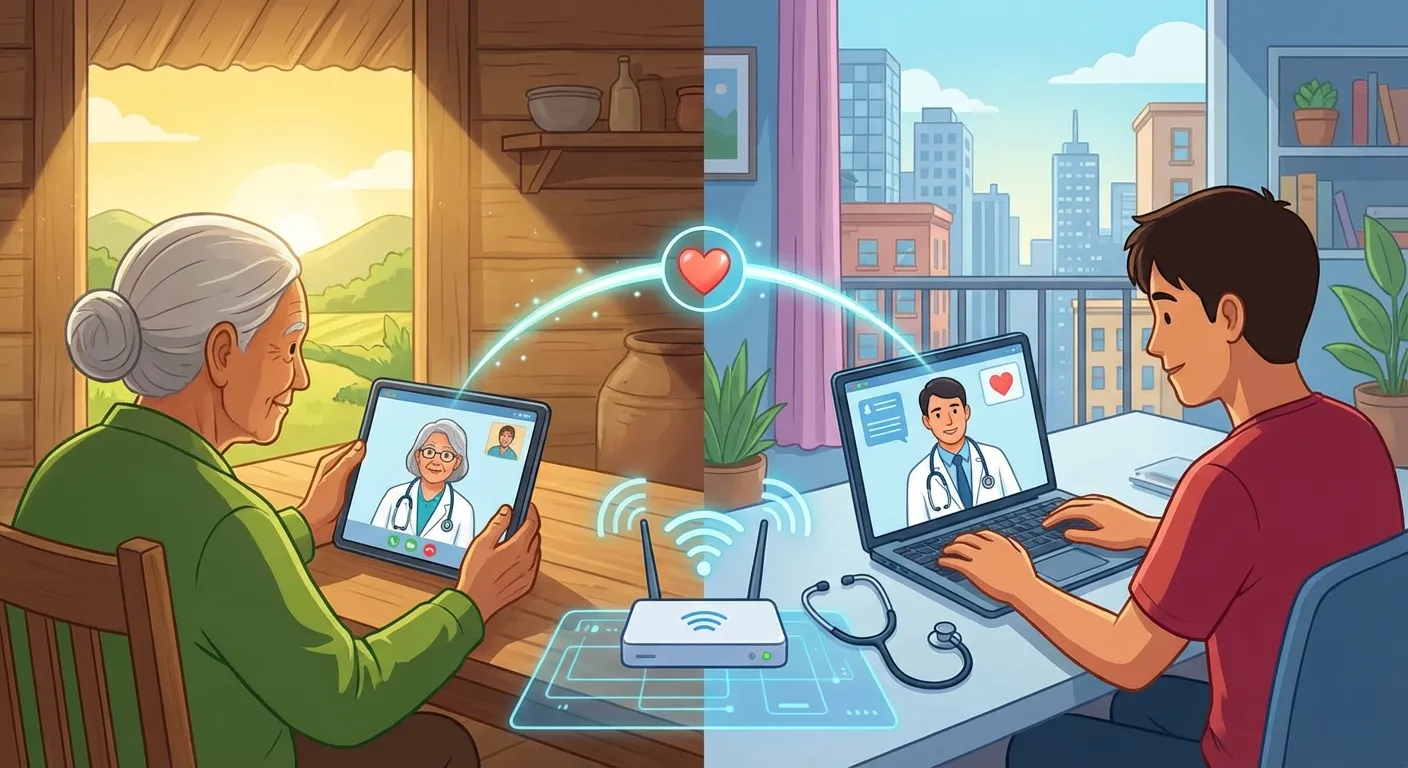
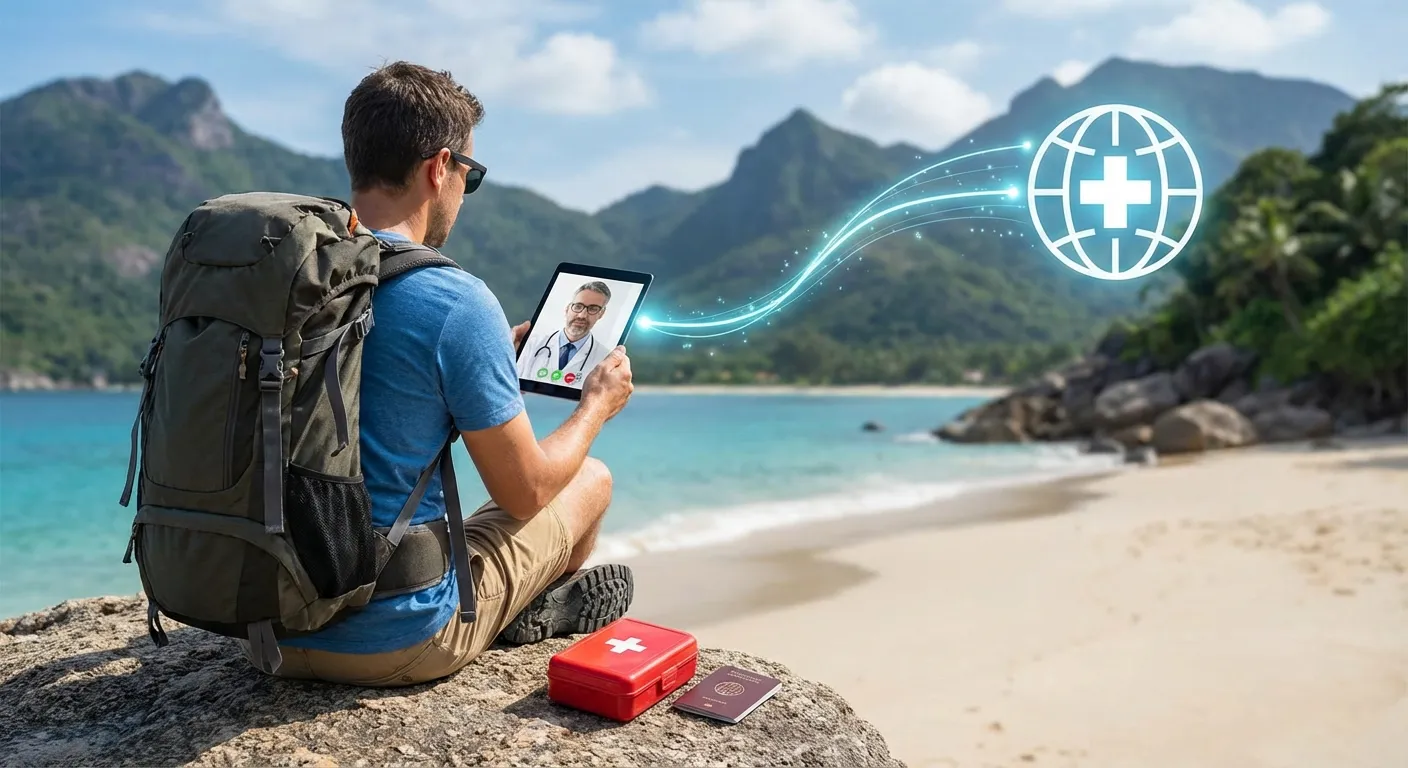
For the vast majority of vacation illnesses, spending your day in a waiting room is entirely unnecessary. Spain's digital health infrastructure has advanced rapidly, allowing tourists to consult with licensed, English-speaking doctors online.
Platforms like UrgentDoc provide a direct, highly efficient alternative to the public ER for minor ailments:
- Unbeatable Cost: A flat rate starting at €39. This is often lower than the excess on your travel insurance, meaning you don't even need to bother with the hassle of filing a claim.
- Unmatched Speed: Connect with a doctor via video call in under 15 minutes, from the comfort of your hotel room or Airbnb.
- Ultimate Convenience: Valid electronic prescriptions are sent directly to your smartphone. You can walk into any of Spain's 22,000+ local pharmacies (farmacias), show the QR code, and pick up your medication immediately.
If you need antibiotics for a sudden infection, allergy medication for an unexpected flare-up, or a comprehensive travel health consultation, an online doctor is unequivocally the most efficient route.
The Role of Spanish Pharmacies (Farmacias)
It is important to understand the role of pharmacies in Spain. Look for the illuminated green cross. Spanish pharmacists are highly trained medical professionals who can offer excellent advice for minor ailments.
However, Spanish law is very strict regarding prescription medications. You cannot buy antibiotics, strong painkillers, or prescription-strength steroid creams over the counter. If you go to a pharmacy with a suspected UTI or a severe chest cough, the pharmacist will turn you away and tell you to see a doctor to get a prescription.
Instead of heading to the ER to get that prescription, you can use an online doctor to get a valid e-prescription in minutes, and then return to the pharmacy to collect your medicine.
When to Use a Public ER vs. Online Doctor
Knowing exactly where to go is critical for both your health outcomes and your wallet.
Go to a Public ER (Call 112) If You Experience:
- Chest pain, pressure, or difficulty breathing
- Severe bleeding that won't stop
- Suspected broken bones or severe joint dislocations
- Signs of a stroke (facial drooping, arm weakness, slurred speech)
- Loss of consciousness, seizures, or severe head trauma
- Severe allergic reactions (anaphylaxis) requiring immediate intervention
- Sudden, severe abdominal pain (potential appendicitis)
Use an Online Doctor If You Experience:
- Urinary symptoms: Burning, frequency, or urgency indicating a need for UTI medication.
- Digestive issues: Food poisoning, stomach bugs, or traveller's diarrhoea.
- Skin conditions: Unexplained rashes, severe insect bites, or painful sunburn.
- Respiratory infections: Sore throat, sinus pressure, earaches, or mild asthma flare-ups requiring asthma inhalers.
- Medication needs: Lost prescriptions, forgotten pills, or the need for short-term refills of chronic medications.
- Eye infections: Redness, discharge, and itching associated with conjunctivitis (pink eye).
Medical Disclaimer: This article is for informational purposes only and does not replace professional medical advice. If you are experiencing a medical emergency in Spain, dial 112 immediately for an ambulance. Telemedicine is not suitable for life-threatening emergencies.
Real-World Scenarios: Making the Right Choice
To illustrate the difference, consider these two common tourist scenarios:
Scenario A: The Weekend UTI Sarah, visiting Barcelona from the US, develops a painful UTI on a Sunday morning.
- The Old Way: She goes to the local public hospital ER. Because a UTI is non-life-threatening (Triage Level 5), she waits 6 hours in the waiting room. She is finally seen by a doctor for 5 minutes, given a paper prescription, and billed €200. Her entire Sunday is ruined.
- The UrgentDoc Way: Sarah books an online consultation from her hotel bed. Within 10 minutes, she is speaking to an English-speaking doctor. The doctor diagnoses her symptoms and sends an e-prescription for antibiotics to her phone. The consultation costs €39. She walks to the 24-hour pharmacy on the corner, pays €5 for the medication, and is back to enjoying her vacation by noon.
Scenario B: The Suspected Fracture John, visiting from the UK, slips on wet stairs and severely injures his wrist. It is swelling rapidly and deformed.
- The Right Choice: John goes directly to the public hospital ER (or a private ER if his travel insurance directs him there). He requires an X-ray, physical manipulation, and a cast. This requires in-person physical examination and imaging equipment. Telemedicine cannot treat a broken bone.
Book an English-Speaking Doctor in Spain
Don't let a minor illness ruin your Spanish holiday. If you are facing a non-emergency health issue, you can bypass the 6-hour hospital wait times and avoid the €200 tourist fees.
Book an online consultation with UrgentDoc today to connect with a licensed, English-speaking doctor in minutes. Get the care you need, the prescriptions you require, and get back to enjoying your vacation.
Frequently Asked Questions (FAQ)
Do tourists have to pay for hospitals in Spain?
Yes. Unless you are an EU citizen carrying a valid European Health Insurance Card (EHIC) or a UK citizen with a Global Health Insurance Card (GHIC), you will be billed for public hospital services. Non-EU tourists (including US, Canadian, and Australian citizens) must pay out-of-pocket or rely on private travel insurance.
How much does a doctor visit cost in Spain without insurance?
A standard consultation at a private walk-in clinic typically costs between €80 and €150. A visit to a public hospital ER starts around €150–€250 just for the triage and consultation. Telemedicine consultations are by far the most affordable option, generally costing from €39.
Are private clinic wait times in Spain shorter than public hospitals?
Yes. Private hospitals and clinics generally have much shorter wait times (1 to 3 hours) compared to public ERs (4 to 8 hours for non-urgent cases). However, private facilities are significantly more expensive and may run unnecessary tests to increase the billable amount to your insurance company.
Can an online doctor prescribe antibiotics in Spain?
Yes. Licensed doctors conducting video consultations can issue legally valid e-prescriptions for antibiotics and other non-controlled medications. These electronic prescriptions feature a secure QR code and are accepted at all Spanish pharmacies.
What happens if I go to the ER in Spain and can't pay?
Spanish public hospitals will never refuse life-saving emergency treatment, regardless of your ability to pay. It is a fundamental right. However, for non-life-threatening conditions, you will be required to provide billing details, passport information, or a credit card guarantee before receiving treatment. If you leave without paying, they will pursue the debt internationally through collection agencies.
Is my UK/US prescription valid in a Spanish pharmacy?
No. Spanish pharmacies cannot legally dispense prescription-only medication (like antibiotics or strong painkillers) based on a prescription written by a doctor outside the EU/EEA. You must get a new prescription from a doctor licensed to practice in Spain or the EU. An online consultation is the fastest way to convert your home prescription into a valid Spanish e-prescription.
Do Spanish doctors speak English?
In private hospitals in major tourist areas (Costa del Sol, Alicante, Balearic Islands), many doctors speak English. However, in public hospitals, English proficiency varies wildly, and you may struggle to communicate complex medical symptoms. Using a dedicated telemedicine platform like UrgentDoc guarantees you will consult with a fluent English-speaking doctor.