Sore Throat While Travelling: When to Worry
Sore throat in Spain? Learn when to worry, how to spot strep throat, pharmacy options, and when to see a doctor online.
Dr. James Wilson
Medical Professional
🩺 Sore Throat While Travelling: When to Worry and What to Do
A sore throat while travelling is one of the most common health complaints among international visitors to Spain. Whether triggered by air-conditioned hotels, long-haul flights or a viral infection picked up on the road, throat pain can range from a minor annoyance to a sign of something more serious.
According to the NHS, most sore throats are caused by viruses and get better on their own within a week. However, certain symptoms require prompt medical attention — especially when you're far from home and unfamiliar with local healthcare.
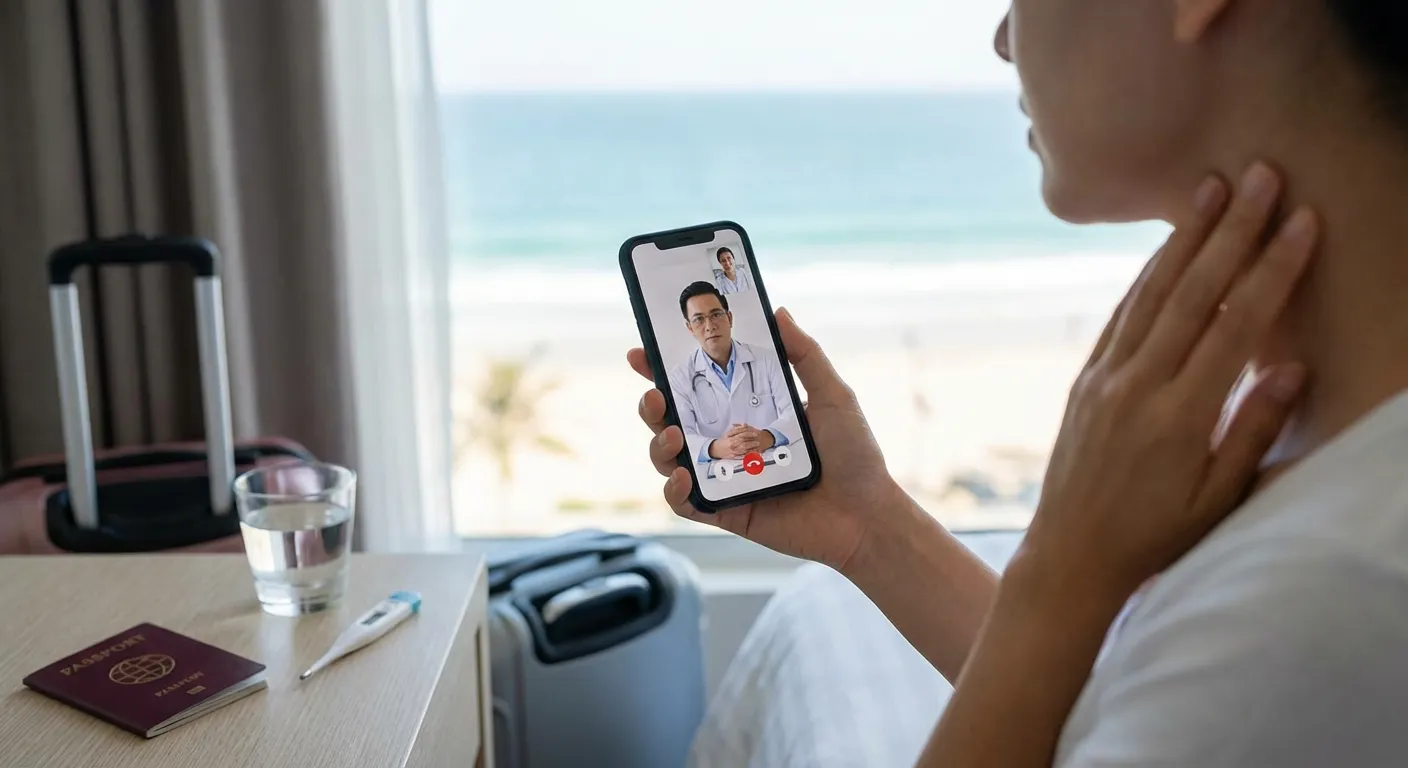
If you're in Spain and need fast, professional advice about a sore throat, you can book an online consultation with UrgentDoc and speak to a licensed doctor in English within minutes.
⚠️ Medical disclaimer: This article is for informational purposes only and does not replace professional medical advice, diagnosis or treatment. Always consult a qualified healthcare provider about your individual circumstances.
🔹 Common Causes of a Sore Throat
The Mayo Clinic identifies several main causes of sore throats:
Viral infections (most common)
The majority of sore throats are caused by the same viruses responsible for the common cold and flu. These include rhinoviruses, influenza, parainfluenza and adenoviruses. Viral sore throats typically resolve on their own within 5–7 days.
Bacterial infections
Strep throat (caused by Group A Streptococcus bacteria) is the most common bacterial cause. The NHS notes that strep throat is more likely if you have a fever, swollen tonsils with white patches, and no cough. Strep throat requires antibiotic treatment.
Environmental factors
Travellers are especially prone to sore throats caused by:
- Air conditioning: Hotels, airports and planes often have powerful AC systems that dry out the throat
- Low humidity on flights: Cabin air has a humidity of around 10–20%, significantly lower than the 30–60% most people are used to
- Air pollution: Cities like Madrid and Barcelona can have high pollution levels during summer
- Dehydration: Not drinking enough water during travel, especially in Spain's warm climate
- Irritants: Smoke, dust and allergens in unfamiliar environments
Other causes
- Allergies: Pollen, dust mites and mould can trigger postnasal drip, irritating the throat
- Acid reflux (GERD): Stomach acid reaching the throat, common when eating unfamiliar or rich foods while travelling
- Voice strain: Talking loudly in noisy bars, restaurants or at events
🔹 Symptoms of a Sore Throat
According to the Mayo Clinic, sore throat symptoms may include:
- Pain or a scratchy feeling in the throat
- Pain that worsens when swallowing or talking
- Difficulty swallowing
- Sore, swollen glands in the neck or jaw
- Swollen, red tonsils
- White patches or pus on the tonsils
- A hoarse or muffled voice
If an infection is the cause, you may also experience fever, cough, runny nose, sneezing, body aches and headache.
🔹 When to Be Concerned: Red Flags
Most sore throats are harmless, but the NHS recommends seeking medical advice if you experience:
- A sore throat that does not improve after a week
- A very high temperature, or feeling hot, cold and shivery
- Difficulty swallowing or breathing
- Drooling (which may indicate inability to swallow)
- Severe pain on one side of the throat
- Swollen, painful glands in the neck that are getting bigger
- A rash alongside the sore throat
- White patches or pus visible at the back of the throat
Seek emergency care immediately (call 112 in Spain) if you or your child:
- Cannot breathe or are struggling to breathe
- Cannot swallow saliva or fluids
- Are making a high-pitched sound when breathing (stridor)
- Have severe symptoms that are getting rapidly worse
🔹 Strep Throat vs Viral Sore Throat: Key Differences
One of the most important distinctions is whether your sore throat is caused by a virus (most common) or by Group A Streptococcus bacteria (strep throat). The CDC notes that strep throat accounts for approximately 20–30% of sore throats in children and 5–15% in adults.
<table style="width: 100%; border-collapse: collapse; margin: 20px 0;"> <thead> <tr style="background-color: #f8f9fa;"> <th style="border: 1px solid #dee2e6; padding: 12px; text-align: left;">Feature</th> <th style="border: 1px solid #dee2e6; padding: 12px; text-align: left;">Viral sore throat</th> <th style="border: 1px solid #dee2e6; padding: 12px; text-align: left;">Strep throat</th> </tr> </thead> <tbody> <tr> <td style="border: 1px solid #dee2e6; padding: 12px;"><strong>Onset</strong></td> <td style="border: 1px solid #dee2e6; padding: 12px;">Gradual</td> <td style="border: 1px solid #dee2e6; padding: 12px;">Sudden and severe</td> </tr> <tr style="background-color: #f8f9fa;"> <td style="border: 1px solid #dee2e6; padding: 12px;"><strong>Cough</strong></td> <td style="border: 1px solid #dee2e6; padding: 12px;">Usually present</td> <td style="border: 1px solid #dee2e6; padding: 12px;">Usually absent</td> </tr> <tr> <td style="border: 1px solid #dee2e6; padding: 12px;"><strong>Fever</strong></td> <td style="border: 1px solid #dee2e6; padding: 12px;">Mild or absent</td> <td style="border: 1px solid #dee2e6; padding: 12px;">High (38°C+)</td> </tr> <tr style="background-color: #f8f9fa;"> <td style="border: 1px solid #dee2e6; padding: 12px;"><strong>Tonsils</strong></td> <td style="border: 1px solid #dee2e6; padding: 12px;">May be red</td> <td style="border: 1px solid #dee2e6; padding: 12px;">Red, swollen, often with white patches</td> </tr> <tr> <td style="border: 1px solid #dee2e6; padding: 12px;"><strong>Runny nose</strong></td> <td style="border: 1px solid #dee2e6; padding: 12px;">Common</td> <td style="border: 1px solid #dee2e6; padding: 12px;">Uncommon</td> </tr> <tr style="background-color: #f8f9fa;"> <td style="border: 1px solid #dee2e6; padding: 12px;"><strong>Antibiotics needed?</strong></td> <td style="border: 1px solid #dee2e6; padding: 12px;">No</td> <td style="border: 1px solid #dee2e6; padding: 12px;">Yes — to prevent complications</td> </tr> </tbody> </table>Strep throat requires antibiotic treatment to prevent complications such as rheumatic fever and peritonsillar abscess. If you suspect strep throat while in Spain, an online consultation can help determine whether antibiotics are needed.
🔹 How to Treat a Sore Throat at Home
While most sore throats resolve without medical treatment, these steps can help you feel better faster:
- Stay hydrated: Drink plenty of water, warm teas or clear broths. Avoid very cold drinks.
- Gargle with warm salt water: Mix half a teaspoon of salt in a glass of warm water — this can reduce swelling and discomfort. (Not suitable for young children.)
- Use over-the-counter pain relief: Paracetamol or ibuprofen can reduce pain and fever. Both are widely available at Spanish pharmacies without a prescription.
- Rest your voice: Avoid shouting or prolonged talking.
- Avoid irritants: Stay away from cigarette smoke, dusty environments and strong fumes.
- Use a humidifier: If your hotel room has dry air from air conditioning, a damp towel hung near the bed can help.
- Try medicated lozenges: Lozenges containing anaesthetic or anti-inflammatory ingredients can soothe throat pain temporarily.
🔹 Does a Sore Throat Need Antibiotics?
Usually not. The NHS states that antibiotics are not normally prescribed for sore throats because most are caused by viruses, which do not respond to antibiotics.
Antibiotics may be prescribed if a doctor suspects a bacterial infection such as strep throat. Signs that suggest bacterial infection include:
- High fever (over 38.3°C / 101°F)
- Swollen tonsils with white patches or pus
- Swollen, tender lymph nodes in the neck
- Absence of cough (cough more commonly indicates a viral cause)
If your doctor determines you need antibiotics, UrgentDoc can issue an e-prescription for antibiotics that you can collect at any pharmacy in Spain.
🔹 Sore Throat While Travelling in Spain: Getting Medical Help
If you're visiting or living in Spain and your sore throat is worrying you, here are your options:
Option 1: Online consultation (fastest)
Book an online consultation with UrgentDoc and speak to a licensed doctor via video. Your doctor can assess your symptoms, determine whether antibiotics are needed, and send an e-prescription directly to your nearest Spanish pharmacy.
Option 2: Spanish pharmacy
Pharmacists in Spain (farmacéuticos) can advise on minor ailments and sell over-the-counter remedies. Look for the green cross sign. Many pharmacists in tourist areas speak English.
Option 3: Public health centre (Centro de Salud)
If you have a European Health Insurance Card (EHIC) or a Spanish health card (Tarjeta Sanitaria), you can visit a public health centre. Be prepared for potentially long waits, and note that consultations are usually in Spanish.
Option 4: Emergency room (Urgencias)
Only for severe symptoms — difficulty breathing, inability to swallow, or high fever with confusion. Call 112 for emergencies in Spain.
🔹 How to Prevent Sore Throats While Travelling
- Drink at least 2 litres of water daily, more in hot weather
- Use a saline nasal spray on flights to keep airways moist
- Avoid sleeping directly under air conditioning vents
- Wash hands frequently, especially after using public transport
- Carry hand sanitiser when handwashing isn't available
- Avoid close contact with people who are visibly unwell
- Pack a travel humidifier for dry hotel rooms
For more tips on staying healthy on the road, see our guide on what to do if you get sick while travelling in Spain and whether your symptoms might be a cold or the flu.
❓ Frequently Asked Questions
Can I fly with a sore throat?
Yes, in most cases a mild sore throat will not prevent you from flying. However, if you have a high fever, difficulty breathing or suspect strep throat, consult a doctor before travelling. If needed, UrgentDoc can issue a fit-to-fly assessment or medical certificate.
How long does a sore throat last?
Most viral sore throats improve within 5–7 days. If yours lasts longer than a week, or is getting worse instead of better, consult a doctor.
Can an online doctor prescribe antibiotics for a sore throat?
Yes, if a doctor determines that your sore throat is likely bacterial (such as strep throat), they can prescribe antibiotics via an e-prescription. UrgentDoc prescriptions are valid at any Spanish pharmacy.
Should I worry about a sore throat with white spots?
White patches on the tonsils can indicate strep throat, tonsillitis or another infection. This warrants a medical consultation, especially if accompanied by fever.
Is a sore throat a symptom of COVID-19?
A sore throat can be a symptom of COVID-19, along with fever, cough and fatigue. If you're concerned, consider taking a rapid antigen test (available at Spanish pharmacies) and consult a doctor if positive.
When is a sore throat an emergency?
Seek emergency care (call 112 in Spain) if you cannot breathe, cannot swallow, are drooling excessively, or have severe symptoms that are getting rapidly worse.
🔹 Get Expert Advice for Your Sore Throat
A sore throat during travel can be stressful, especially when you're unsure whether it needs treatment. Don't wait for it to become worse — a quick consultation can give you clarity and peace of mind.
👉 Book an online consultation with UrgentDoc — speak to a licensed doctor in English, get an assessment in minutes, and receive any prescriptions sent directly to your nearest Spanish pharmacy.