Cold or Flu: How to Tell the Difference
Cold vs flu — compare symptoms side by side, learn when to see a doctor, and find treatment options in Spain including pharmacies.
Dr. Robert Anderson
Medical Professional
Medically reviewed by Dr. Robert Anderson · Updated November 4, 2024
🩺 Cold or Flu: How to Tell the Difference and When to See a Doctor
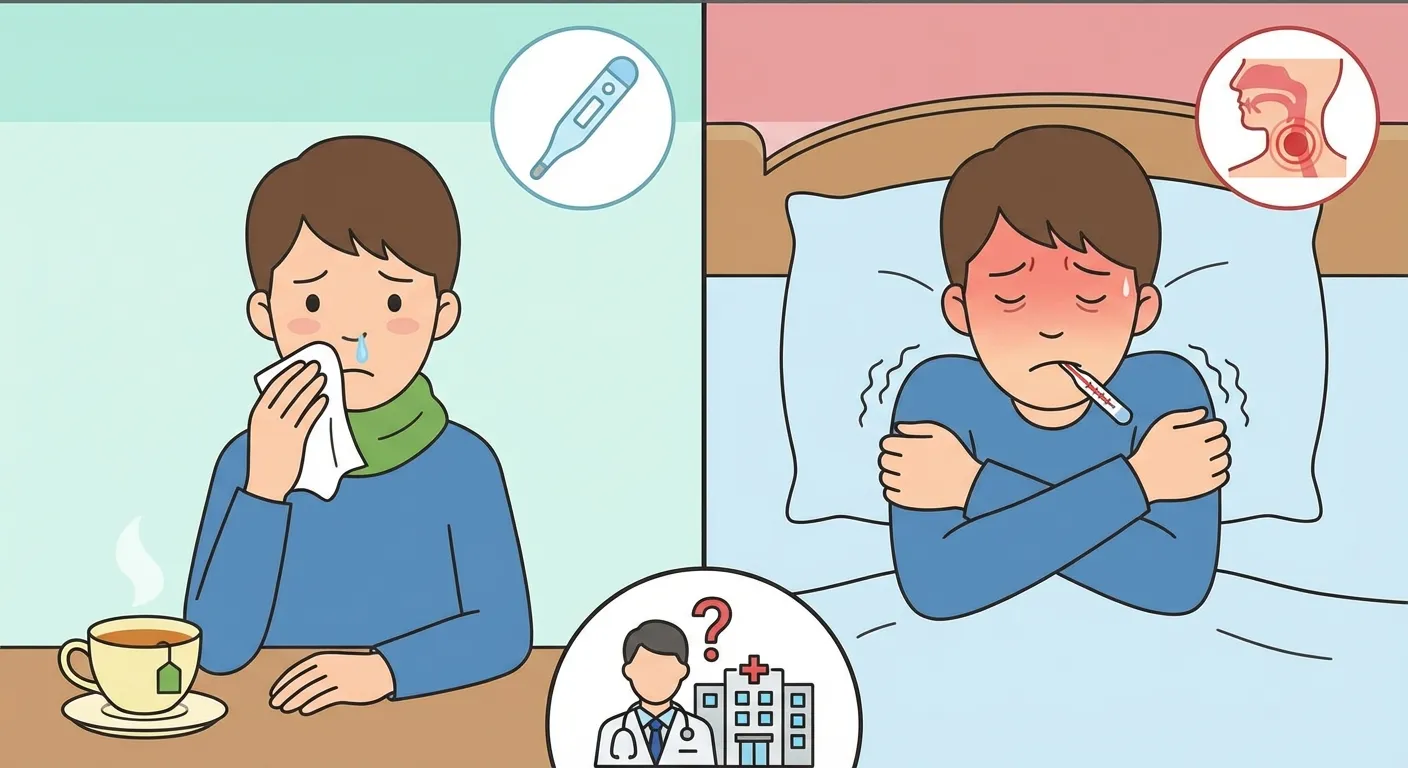
When you start feeling tired, sneezy and congested, it's natural to wonder: is this a cold or the flu? Both are respiratory infections caused by viruses, and their symptoms can overlap — but they differ significantly in severity, onset and potential complications.
According to the NHS, flu tends to come on suddenly and feel much worse than a cold, with high fever, body aches and intense fatigue. A cold usually develops gradually and stays milder. Knowing the difference helps you decide when to rest at home and when to seek medical advice.
If you're in Spain and unsure whether your symptoms need medical attention, book an online consultation with UrgentDoc — speak to a licensed doctor in English and get clear advice within minutes.
⚠️ Medical disclaimer: This article is for informational purposes only and does not replace professional medical advice, diagnosis or treatment. Always consult a qualified healthcare provider about your individual circumstances.
🔹 What's the Difference Between a Cold and the Flu?
| Feature | Common Cold | Influenza (Flu) |
|---|---|---|
| Onset | Gradual (over 1–2 days) | Sudden (within hours) |
| Fever | Rare or mild | Common, often 38–40°C |
| Body aches | Mild | Moderate to severe |
| Fatigue | Mild | Can be intense, lasting weeks |
| Headache | Rare | Common and often severe |
| Sore throat & sneezing | Very common | Less common |
| Cough | Mild to moderate | Often dry and persistent |
| Duration | 3–7 days | 7–14 days (fatigue may last longer) |
| Complications | Rare (sinus or ear infection) | Pneumonia, bronchitis, hospitalisation |
The key differentiator: if symptoms hit you suddenly with significant fever, body aches and exhaustion, it's more likely the flu. If symptoms build gradually with a runny nose and mild sore throat, it's probably a cold.
🔹 Cold Symptoms Explained
The common cold is caused by over 200 different viruses, most commonly rhinoviruses. According to the Mayo Clinic, typical cold symptoms include:
- Runny or stuffy nose — usually the first symptom
- Sore throat — often the earliest sign, usually improving after a day or two
- Sneezing
- Mild cough
- Low-grade fever (more common in children)
- Mild body aches
- General tiredness
Cold symptoms peak around day 2–3 and typically resolve within 7–10 days.
🔹 Flu Symptoms Explained
Influenza is caused by influenza A or B viruses and tends to be more severe. The NHS describes flu symptoms as:
- Sudden high fever (38°C or above)
- Body aches and pains — muscles feel heavy and sore
- Extreme tiredness and weakness — you may struggle to get out of bed
- Dry, persistent cough
- Headache
- Chills and sweating
- Loss of appetite
- Difficulty sleeping
Flu symptoms usually peak within 2–3 days and most people recover within 1–2 weeks, though fatigue can linger for several weeks.
🔹 When to See a Doctor
Most colds and mild flu cases resolve at home with rest and fluids. However, you should seek medical advice if:
- Fever persists above 38.5°C for more than 3 days
- Breathing becomes difficult — shortness of breath, wheezing or chest tightness
- Symptoms worsen after initially improving (may indicate a secondary infection)
- You can't keep fluids down due to nausea or vomiting
- Symptoms last longer than 10 days without improvement
- You're in a high-risk group: over 65, pregnant, immunocompromised, or have a chronic condition like asthma, diabetes or heart disease
Call 112 (Spain's emergency number) if you experience severe difficulty breathing, chest pain, confusion, or are unable to stay awake.
🔹 Treatment: Managing a Cold at Home
There's no cure for the common cold — treatment focuses on symptom relief:
- Rest and avoid strenuous activity
- Drink plenty of fluids — water, herbal teas, clear broths
- Paracetamol or ibuprofen for headache, sore throat and mild fever (both available at Spanish pharmacies)
- Decongestant nasal sprays for a blocked nose (use for no more than 5–7 days)
- Honey and lemon in warm water can soothe a sore throat (not for children under 1)
- Gargle warm salt water for throat pain
- Avoid antibiotics — colds are viral; antibiotics won't help
🔹 Treatment: Managing the Flu at Home
Flu treatment also focuses on rest and symptom management:
- Rest in bed until fever subsides
- Stay hydrated — dehydration is a common complication
- Paracetamol or ibuprofen for fever and body aches
- Avoid spreading the virus — wash hands frequently, cover coughs, avoid contact with others
Antiviral medication
In some cases, a doctor may prescribe antiviral medications (such as oseltamivir/Tamiflu) for the flu. The NHS notes these work best when started within 48 hours of symptoms beginning and are primarily recommended for people at high risk of complications.
If you think you have the flu and are in a high-risk group, book an online consultation quickly to discuss whether antivirals are appropriate for you.
🔹 Cold and Flu While Travelling in Spain
Getting sick during a trip can be particularly disruptive. Here's how to manage:
- Spanish pharmacies (farmacias, marked with a green cross) can sell you paracetamol, ibuprofen, cough medicines and decongestants without a prescription
- Online consultation with UrgentDoc gives you access to a doctor for cold symptoms or flu symptoms in English — faster than navigating the Spanish public health system
- Stay at your accommodation and rest — trying to push through sightseeing while sick often makes things worse
- Inform travel companions and practise good hygiene to avoid spreading the infection
🔹 How to Prevent Colds and Flu
- Wash hands frequently with soap and water for at least 20 seconds
- Avoid touching your face — especially eyes, nose and mouth
- Get an annual flu vaccination — the WHO recommends flu vaccination particularly for high-risk groups
- Maintain a healthy immune system — balanced diet, regular exercise, adequate sleep
- Avoid close contact with people who are visibly unwell
- Carry hand sanitiser when travelling
❓ Frequently Asked Questions
How can I tell if it's the flu or just a cold?
The biggest clue is onset and severity. Flu hits suddenly with high fever, severe body aches and exhaustion. A cold develops gradually with milder symptoms focused on the nose and throat.
Can I fly with a cold or flu?
Mild cold symptoms usually don't prevent flying, but avoid travelling if you have a high fever or feel very unwell. Flying with severe congestion can also cause painful ear pressure. If you need a fit-to-fly assessment, UrgentDoc can help.
Should I take antibiotics for a cold or flu?
No. Both colds and flu are caused by viruses, and antibiotics only work against bacteria. Taking antibiotics unnecessarily contributes to antibiotic resistance. A doctor may prescribe antibiotics only if a secondary bacterial infection develops.
When should I worry about a cough after a cold?
A lingering cough after a cold can last 2–3 weeks and is usually harmless. See a doctor if the cough persists beyond 3 weeks, produces blood-streaked mucus, or is accompanied by shortness of breath.
Is it a cold, flu or COVID-19?
The symptoms can overlap significantly. COVID-19 is more likely if you also experience loss of taste or smell. If in doubt, take a rapid antigen test (available at Spanish pharmacies) and consult a doctor. Read our guide on sore throats while travelling for more on distinguishing respiratory symptoms.
Can an online doctor help with cold or flu symptoms?
Yes. An online consultation can help determine whether your symptoms need medical treatment, prescribe medication if needed, and advise on when to seek in-person care.
🔹 Get Medical Advice for Cold and Flu Symptoms
Unsure whether your symptoms are a cold, the flu, or something else? A quick consultation can give you answers and peace of mind — especially important when you're travelling.
👉 Book an online consultation with UrgentDoc — speak to a licensed doctor in English, get assessed in minutes, and receive any prescriptions directly to your nearest Spanish pharmacy.