Antibiotic Eye Drops in Spain: Do You Need a Prescription?
In Spain, all antibiotic drops require a prescription. You can buy lubricating drops without one, or our doctors can issue a prescription if appropriate.
Dr. Daniel Cuenca Leal
Colegiado nº 284627651 · Ilustre Colegio Oficial de Médicos de Madrid

Can you buy antibiotic eye drops in Spain without a prescription?
Quick answer: No. Every antibiotic eye drop, eye ointment and eye gel on sale in Spain is classified as prescription-only ('Medicamento Sujeto A Prescripción Médica') in CIMA, the Spanish medicines agency's database, and a pharmacist may only dispense a prescription-only medicine against a prescription (AEMPS CIMA, BOE Ley de garantías). You cannot buy them over the counter at a Spanish pharmacy.
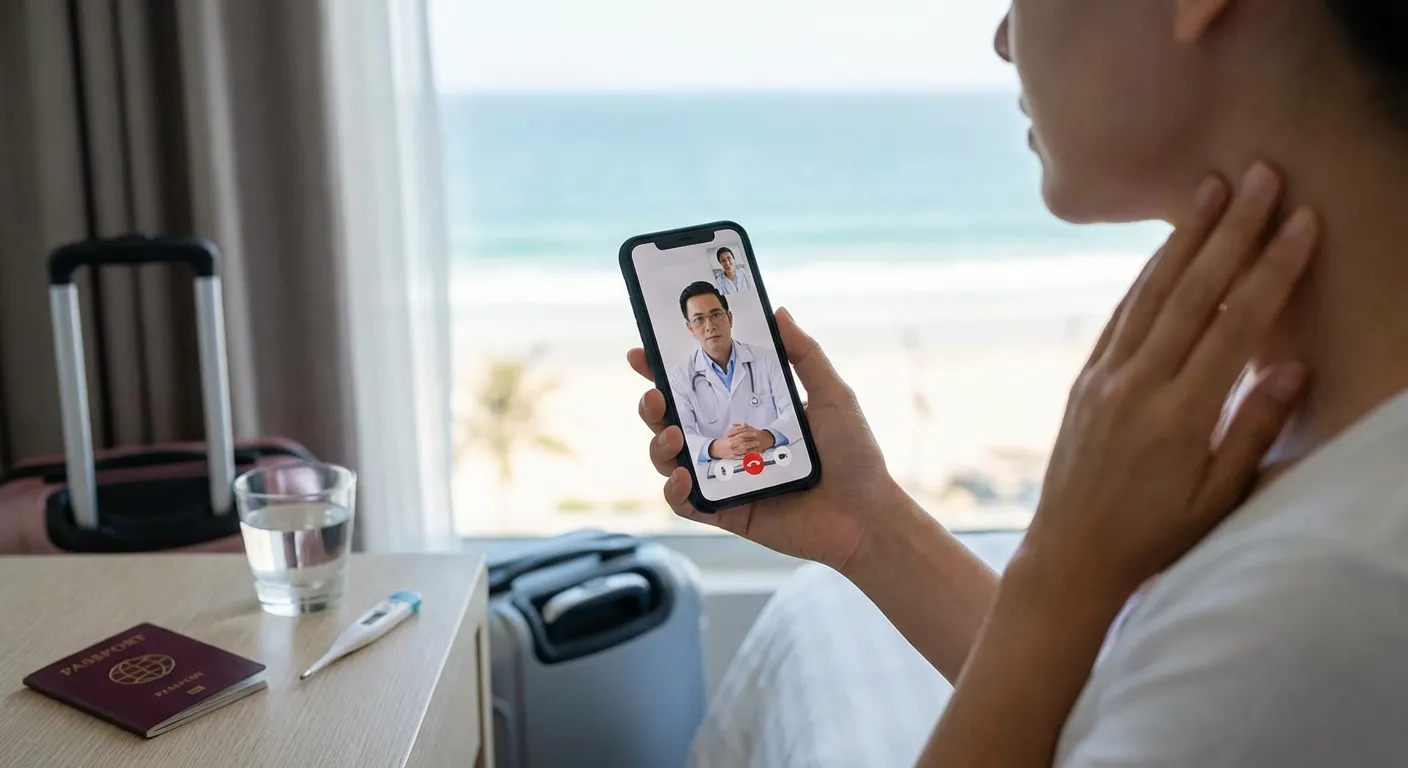
If you have symptoms of an eye infection while in Spain, you can book an online conjunctivitis consultation with one of our English-speaking doctors licensed in Spain. Consultations start from EUR 39, with the fee displayed on the doctor's offer before you choose a time and pay. The doctor evaluates your symptoms over video, determines whether a prescription medicine is clinically appropriate, and, if so, issues a private electronic prescription sent as a PDF to your email.
This article is for informational purposes only and does not replace professional medical advice, diagnosis, or treatment. Always consult a healthcare provider for any medical condition.
For international visitors seeking medical attention for an eye issue in Spain, several routes are available (European Commission):
| Route | Wait | What you pay | Language | What you can get |
|---|---|---|---|---|
| Pharmacy (farmacia), no appointment | None | Product price | Varies | Non-prescription eye products only; no antibiotic eye drops (AEMPS CIMA) |
| Public health system (centro de salud) | Varies | EHIC: same rights as people insured in Spain, for care that can't wait | Varies | Public prescription if the doctor decides |
| Private clinic | Varies | Clinic fee; the EHIC does not cover private care | Varies | Private prescription if the doctor decides |
| UrgentDoc video consultation | At a time you choose from the doctors' offers | From EUR 39; medicine paid at the pharmacy | English | Private prescription (PDF by email) if the doctor decides it is appropriate |
Can you buy chloramphenicol eye drops in Spain?
In the UK, chloramphenicol eye drops and eye ointment can be bought from pharmacies, or prescribed if required (NHS Chloramphenicol). Because of this, many UK travelers expect to walk into a Spanish pharmacy and purchase the same product over the counter.
However, chloramphenicol is not sold as eye drops in Spain: CIMA lists no chloramphenicol eye drops (AEMPS CIMA). The only chloramphenicol product for the eye is an eye ointment, Oftalmolosa Cusí Cloramfenicol 10 mg/g, and it needs a prescription (AEMPS CIMA). Furthermore, Spain's patient leaflet for that ointment says not to use it for minor infections, for prevention, or if other antibiotics can be used: it is reserved for more serious infections (AEMPS Leaflet Oftalmolosa).
Which antibiotic eye drops are sold in Spain, and what are they called?
Every antibiotic eye drop, eye ointment and eye gel on sale in Spain is classified as prescription-only in CIMA (AEMPS CIMA). The following table lists the active antibiotic substances and authorized brand names currently marketed in Spain:
| Antibiotic (Spanish name) | Product name in Spain | Form | Prescription? |
|---|---|---|---|
| chloramphenicol (cloranfenicol) | Oftalmolosa Cusí Cloramfenicol 10 mg/g | eye ointment (pomada oftálmica); no eye drops sold | Yes |
| tobramycin (tobramicina) | Tobrex, Ursitan | eye drops (colirio); Tobrex also as eye ointment | Yes |
| ofloxacin (ofloxacino) | Exocin, Ofloxacino POS | eye drops | Yes |
| ciprofloxacin (ciprofloxacino) | Oftacilox, Cetraflux | eye drops; Oftacilox also as eye ointment | Yes |
| moxifloxacin (moxifloxacino) | Vigamox, Abimox, Omnimoxa PF | eye drops | Yes |
| azithromycin (azitromicina) | Azydrop | single-dose eye drops | Yes |
| fusidic acid (ácido fusídico) | Fucithalmic | eye gel (gel oftálmico) | Yes |
| netilmicin (netilmicina) | Netenax | eye drops | Yes |
| gentamicin, erythromycin and tetracyclines | Oftalmolosa Cusí Gentamicina, Oftalmolosa Cusí Eritromicina, Terramicina, Oftalmolosa Cusí Aureomicina | eye ointment | Yes |
| antibiotic + corticosteroid combinations | Tobradex, Maxitrol, Netdex, Ducressa | eye drops | Yes |
In Spanish, eye drops are 'colirio', eye ointment is 'pomada oftálmica', eye gel is 'gel oftálmico', and conjunctivitis is 'conjuntivitis' (AEMPS CIMA).
Do you need antibiotic eye drops for conjunctivitis?
Most cases of acute infectious conjunctivitis in adults are caused by viruses and clear up on their own; they do not need antibiotic treatment (CDC Clinical Overview). Antibiotics treat bacterial infections; they do not work against viruses, so they will not improve viral conjunctivitis (AEMPS Leaflet Oftalmolosa, CDC Pink Eye Treatment).
Viral conjunctivitis usually clears up in 7 to 14 days without treatment, although it can sometimes take 2 to 3 weeks or more (CDC Pink Eye Treatment). Mild bacterial conjunctivitis may get better without antibiotics: it usually clears up in 2 to 5 days without treatment, but can take 2 weeks to go away completely (CDC Pink Eye Treatment).
For bacterial conjunctivitis, a doctor may prescribe an antibiotic, usually as eye drops or ointment (CDC Pink Eye Treatment). The CDC says antibiotics may help shorten the infection, reduce complications and prevent spread to others, and may be necessary when there is discharge (pus), when the immune system is weakened, or when certain bacteria are suspected (CDC Pink Eye Treatment).
Bacterial, viral and allergic conjunctivitis share signs and symptoms, which can make the diagnosis difficult (CDC Clinical Overview). Allergic conjunctivitis is not contagious and is common in people with hay fever, asthma or eczema (CDC Clinical Overview). It usually improves when the allergen, such as pollen or animal dander, is removed; allergy medicines and certain eye drops, including some prescription eye drops, can also provide relief (CDC Pink Eye Treatment).
What can you buy at a Spanish pharmacy for conjunctivitis without a prescription?
In Spain, non-prescription medicines are for conditions that do not need a precise diagnosis, and the pharmacist advises you on how to use them (BOE Ley de garantías). Cold compresses and artificial tears can help relieve some of the inflammation and dryness (CDC Pink Eye Treatment).
In Spain, lubricating eye drops and gels (artificial tears) are sold without a prescription, and so are a few anti-allergy eye drops; most anti-allergy eye drops, such as olopatadine, ketotifen, azelastine and bilastine, need a prescription (AEMPS CIMA). If you require prescription allergy treatments, you may need an evaluation for prescription allergy eye drops in Spain.
Spain classifies each medicine product, not each ingredient: levocabastine 0.5 mg/ml eye drops are non-prescription when sold as Reactine Levocabastina, but prescription-only when sold as Bilina (AEMPS CIMA).
| What you ask for | Examples in Spain | Prescription? |
|---|---|---|
| Antibiotic eye drops, ointment or gel | All products in the table above | Yes |
| Chloramphenicol eye drops | Not sold in Spain | - |
| Lubricating eye drops or gel (artificial tears) | Artific (hypromellose), Viskern or Carmelosa Stada (carmellose), Siccafluid, Lipolasic or Lacryvisc (carbomer gel) | No |
| Levocabastine anti-allergy eye drops | Reactine Levocabastina | No |
| Levocabastine anti-allergy eye drops | Bilina | Yes |
| Other anti-allergy eye drops | olopatadine (Opatanol, Apadin), ketotifen (Zaditen), azelastine (Afluon), bilastine (Bilaxten), emedastine (Emadine) | Yes |
| Sodium cromoglicate eye drops | None on sale in Spain | - |
How do you get antibiotic eye drops prescribed in Spain?
Spanish law prohibits selling prescription-only medicines by mail order or online (BOE Ley de garantías). Prescription-only eye drops must be obtained in person from an authorized pharmacy open to the public (BOE Ley de garantías).
To get evaluated by a doctor, you can book an online conjunctivitis consultation with one of our English-speaking doctors licensed in Spain, from wherever you are staying in Spain. For parents of children (not newborns) needing clinical care, an online pediatrician consultation is also an option.
Consultations start from EUR 39; the fee is shown on the doctor's offer before the patient chooses a time and pays. You pay two things: the consultation fee, from EUR 39, and the pharmacy's price for any medicine (European Commission). The EHIC does not cover private healthcare (European Commission).
During the consultation, the doctor asks about the symptoms (discharge, pain, light sensitivity, changes in vision, how long it has lasted), contact lens wear, medical history including a weakened immune system, current medicines, allergies, and pregnancy or breastfeeding. The doctor can see the eye on the video call, but a video consultation cannot replace an in-person eye examination; if the doctor thinks you need one, they will tell you.
The doctor decides whether a medicine is appropriate and which one. A prescription is never guaranteed: it is the doctor's clinical decision. Our doctors do not prescribe antibiotics for viral infections, adhering to medical standards for antibiotic prescriptions in Spain. If the doctor decides a medicine is appropriate, you receive a private electronic prescription as a PDF by email, issued through a private e-prescription platform such as REMPe.
A private prescription in Spain must show your DNI or NIE number or, for foreign citizens without one, your passport number (BOE Real Decreto 1718/2010). Show the prescription's QR code at a pharmacy; the pharmacist checks it before dispensing the medicine. A prescribed antibiotic is for one person only, and leftover antibiotic should go back to the pharmacy rather than be kept (AEMPS Leaflet Oftalmolosa).
Can a Spanish pharmacy use your UK prescription for eye drops?
Spain's rule for prescriptions from other EU countries does not cover UK or US prescriptions, so you need a new prescription - for example, a Spanish one (BOE Real Decreto 1718/2010).
A prescription issued in another EU country can be dispensed in Spain if the medicine is authorised here, though the pharmacist may still refuse if in reasonable doubt about its authenticity or validity (BOE Real Decreto 1718/2010). You can read more about how foreign prescriptions work in Spain.
A Spanish prescription is valid throughout Spain (BOE Real Decreto 1718/2010). The pharmacist checks it and will not dispense it if there are reasonable doubts about its authenticity or validity (BOE Real Decreto 1718/2010).
What should you do if you wear contact lenses?
Stop wearing contact lenses until a doctor says you can wear them again; if you did not see a doctor, do not wear them until your symptoms have gone (CDC Pink Eye Treatment).
Contact lens wearers with bacterial conjunctivitis are at higher risk of bacterial keratitis, and the CDC advises doctors to have them take their lenses out and be evaluated promptly by an ophthalmologist (CDC Clinical Overview). This means an in-person eye examination is necessary rather than managing the symptoms yourself.
Viral and bacterial conjunctivitis are very contagious (CDC Clinical Overview). Washing your hands often, using your own towel and avoiding close contact with others help prevent spreading viral conjunctivitis (CDC Clinical Overview).
When should you seek urgent in-person care?
A video consultation cannot replace an in-person eye examination; if our doctor thinks you need one, they will tell you.
You should seek immediate, in-person medical evaluation if you experience any of the following (CDC Pink Eye Treatment):
- Eye pain
- Light sensitivity
- Blurred vision that does not improve when discharge is wiped from the eyes
- Intense eye redness
- Symptoms that get worse or do not improve
- Bacterial conjunctivitis that does not improve after 24 hours of antibiotic use
- A weakened immune system
Additionally, newborns with symptoms of conjunctivitis should see a doctor right away (CDC Pink Eye Treatment).
Frequently Asked Questions
Can you buy antibiotic eye drops over the counter in Spain?
No. Every antibiotic eye drop, eye ointment and eye gel on sale in Spain is classified as prescription-only in CIMA, the Spanish medicines agency's database (AEMPS CIMA). Pharmacists are prohibited by law from dispensing them without a valid medical prescription (BOE Ley de garantías).
Can I buy chloramphenicol eye drops in Spain?
No. Chloramphenicol is not sold as eye drops in Spain, as CIMA lists no authorized chloramphenicol eye drops (AEMPS CIMA). The only chloramphenicol eye product available is an eye ointment that requires a prescription and is reserved for more serious infections (AEMPS CIMA, AEMPS Leaflet Oftalmolosa).
What are eye drops called in Spanish?
In Spanish, eye drops are called 'colirio' (AEMPS CIMA). Eye ointment is known as 'pomada oftálmica', eye gel is called 'gel oftálmico', and conjunctivitis is referred to as 'conjuntivitis' (AEMPS CIMA).
Do you need antibiotics for conjunctivitis?
Not always. Most cases of acute infectious conjunctivitis in adults are caused by viruses and clear up on their own without antibiotic treatment (CDC Clinical Overview). Antibiotics do not work against viral infections, though a doctor may prescribe them for bacterial conjunctivitis if there is pus, a weakened immune system, or suspected bacterial pathogens (AEMPS Leaflet Oftalmolosa, CDC Pink Eye Treatment).
Can I use my UK prescription for eye drops in Spain?
No. Spain's regulations for recognising foreign prescriptions apply to other EU Member States and do not cover UK or US prescriptions (BOE Real Decreto 1718/2010). To get prescription eye drops in Spain, you will need a new prescription issued by an authorised doctor, such as through a Spanish private prescription (BOE Real Decreto 1718/2010).
Can I wear contact lenses with conjunctivitis?
You should stop wearing contact lenses until a doctor confirms it is safe, or until your symptoms have fully resolved (CDC Pink Eye Treatment). Contact lens wearers with bacterial conjunctivitis face a higher risk of bacterial keratitis and require a prompt evaluation by an ophthalmologist (CDC Clinical Overview).
Is conjunctivitis contagious?
Viral and bacterial forms of conjunctivitis are very contagious and spread rapidly through contact with eye discharge or contaminated hands and objects (CDC Clinical Overview). Allergic conjunctivitis, however, is not contagious and is typically related to allergies such as hay fever (CDC Clinical Overview).
Can I get antibiotic eye drops online in Spain?
Spanish law strictly prohibits the mail-order or online sale of prescription-only medicines (BOE Ley de garantías). While you cannot buy the physical medication online, you can consult a doctor via telemedicine to receive an electronic prescription, which you then present in person at a licensed Spanish pharmacy (BOE Ley de garantías).
Need an assessment for red, irritated eyes while in Spain? Book a video consultation with an English-speaking licensed doctor.