Chest or Sinus Infection in Spain: Do You Need Antibiotics?
In Spain, antibiotics need a prescription. Spanish public-health guides say most of these infections are viral. A doctor can assess you by video from €39.
Dr. Daniel Cuenca Leal
Colegiado nº 284627651 · Ilustre Colegio Oficial de Médicos de Madrid
Medically reviewed by Dr. Daniel Cuenca Leal · Updated November 4, 2026

What should you do about a chest or sinus infection in Spain?
Quick answer: In Spain, every oral antibiotic used for chest and sinus infections is prescription-only and cannot be purchased over the counter at a pharmacy (farmacia). Spanish public-health guidelines state that most acute chest and sinus infections are viral and clear up on their own without antibiotics. If you develop warning signs or your symptoms persist, you must be assessed by a doctor to determine whether an antibiotic prescription (receta) is medically indicated.
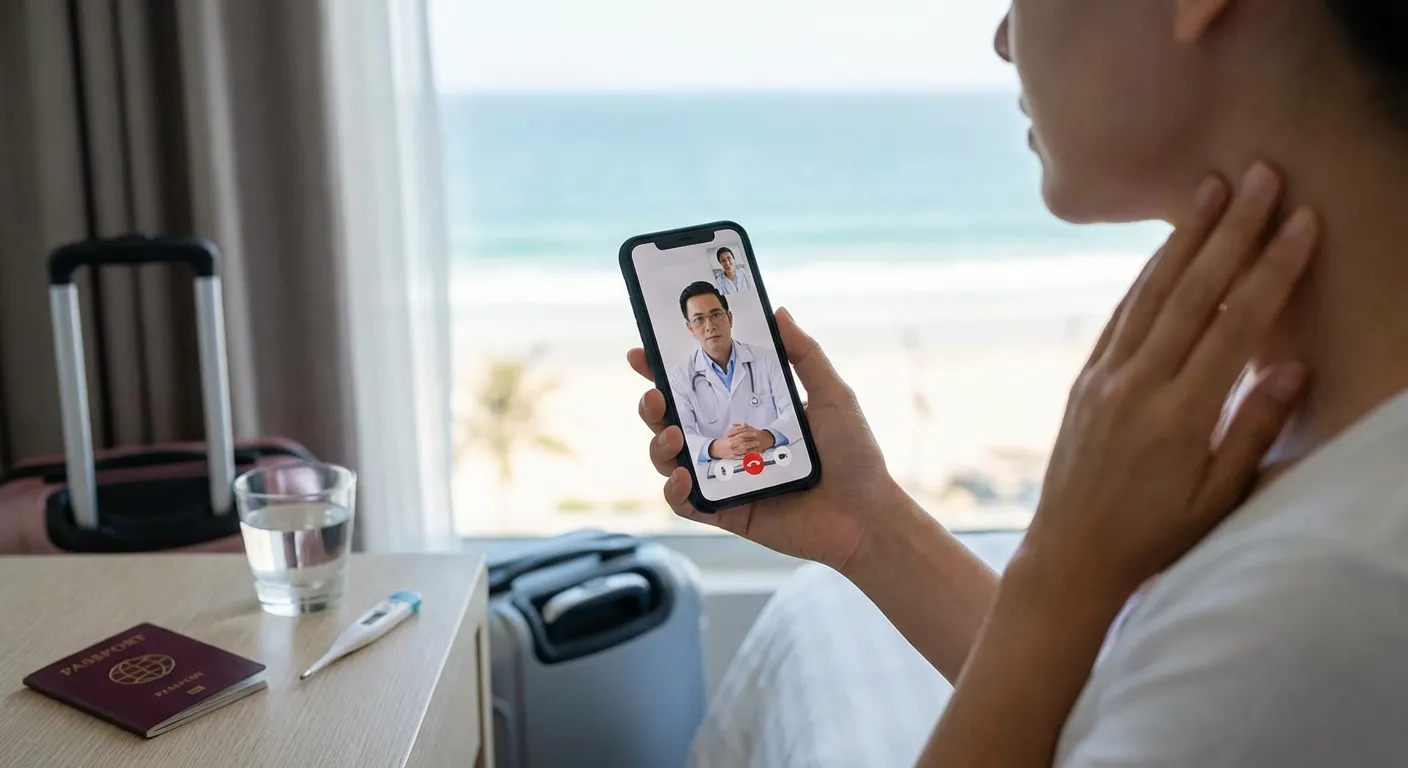
If you are unwell while visiting or living in Spain, UrgentDoc provides video consultations with English-speaking doctors licensed in Spain at a time you book. You can complete an online consultation about antibiotics starting from €39, with the full price displayed clearly before you pay. The doctor reviews your symptoms, medical history, allergies, and current medications to assess if prescription medication is necessary. If appropriate, a prescription is issued directly to you; otherwise, they may recommend over-the-counter options or refer you for an in-person physical assessment.
Medical disclaimer: This article is provided for informational purposes only and does not replace professional medical advice, diagnosis, or clinical examination. If you experience severe or rapidly deteriorating symptoms, contact emergency services immediately.
The European Health Insurance Card (EHIC) gives temporary visitors access to public healthcare that cannot wait until returning home, under the same terms as people insured in Spain, but the EHIC does not cover private healthcare (European Commission). Here is how healthcare routes compare across Spain:
| Route | Wait | What you pay | Language | What you can get |
|---|---|---|---|---|
| Pharmacy (farmacia), no appointment | None | Product price | Varies | Decongestant sprays, cough medicines, painkillers; no antibiotics |
| Public health centre (centro de salud) or hospital urgencias | Varies | EHIC: same rights as people insured in Spain, for care that can't wait | Varies | In-person examination; public prescription if the doctor decides |
| Private clinic | Varies | Clinic fee; the EHIC does not cover private care | Varies | In-person examination; private prescription if the doctor decides |
| UrgentDoc video consultation | A time you book | From €39, shown before you pay; medicine paid at the pharmacy | English | Video assessment without a physical examination; private prescription through REMPe if the doctor decides it is appropriate |
Do you need antibiotics for a chest or sinus infection?
This guide focuses strictly on adult respiratory conditions; if you are caring for a child with a chest or sinus issue, consult a doctor directly or arrange an online pediatrician consultation.
Many international visitors expect antibiotics when suffering from heavy congestion or a persistent chest cough. However, Spanish regional public-health clinical guidelines emphasize that respiratory infections are overwhelmingly caused by viruses, against which antibacterial agents have no effect:
| Infection | Usual cause | What the guide says about antibiotics |
|---|---|---|
| Cold (resfriado) | Virus | Never indicated for a cold (SACYL cold guide); not indicated (Aragón PROA guide) |
| Acute sinusitis (sinusitis) | Virus in about 90% (Aragón PROA guide) | Not indicated in general; considered for fever above 38.5 °C, no improvement after 7-10 days of symptom treatment or a weakened immune system (Aragón PROA guide); reserved for suspected bacterial sinusitis with severe features (SACYL sinusitis guide) |
| Acute bronchitis (bronquitis) (chesty cough) | Virus in more than 90% (Aragón PROA guide) | Not needed (Murcia health service); considered individually if very unwell, frail, or older with heart failure or diabetes (Aragón PROA guide) |
| Pneumonia (neumonía) | Varies | Needs a doctor's examination and often a chest X-ray; treated by a doctor (SACYL pneumonia guide) |
Patients often assume discoloured phlegm indicates a bacterial problem. Green or yellow mucus on its own does not tell a cold from sinusitis, and Spanish guidance says its colour should not decide whether you get antibiotics (SACYL cold guide). Additionally, during the winter flu season, influenza may be the underlying cause; antibiotics do not treat flu, and you can schedule a flu consultation online if influenza is suspected (SACYL cold guide).
Sinus infection (sinusitis): when is an antibiotic considered?
Acute rhinosinusitis (sinusitis) is usually an inflammatory complication following a viral upper respiratory infection. Under the SACYL clinical guide, fewer than 2% of adult acute sinusitis cases become bacterial, and 70-80% of adults with a normal immune system improve within two to three weeks without antibiotics (SACYL sinusitis guide). Aragón's primary-care antibiotic guidance notes that sinusitis is viral in about 90% of cases and resolves spontaneously in the majority (Aragón PROA guide).
Antibiotic therapy is not indicated routinely. Doctors only consider antibacterial treatment if specific severity criteria are met:
- A fever above 38.5 °C, lack of improvement after 7-10 days of symptom treatment, or an underlying weakened immune system (Aragón PROA guide).
- Suspected acute bacterial sinusitis presenting with severe features: temperature above 38 °C, severe facial pain lasting 3 or more days, facial swelling, redness, facial tenderness, or progressive worsening after an initial mild phase (SACYL sinusitis guide).
When a doctor confirms a bacterial indication, the SACYL guidelines list amoxicillin (amoxicilina) as the primary first choice. If there is no clinical response within 48 to 72 hours, amoxicillin with clavulanic acid (amoxicilina con ácido clavulánico) is recommended, while azithromycin (azitromicina) is listed for patients with a penicillin allergy (SACYL sinusitis guide). If your symptoms point to a severe bacterial illness while travelling, you can arrange an online consultation for a sinus infection.
Chest infection or bronchitis: when do you need a doctor?
Acute bronchitis (bronquitis) causes inflammation of the lower airways leading to a chesty cough. According to Murcia's public-health guidance, uncomplicated acute bronchitis does not need antibiotics; even when warning signs or underlying chronic illnesses are present, the need for antibacterial therapy remains exceptional (Murcia health service). Aragón guidance likewise highlights that acute bronchitis is viral in over 90% of presentations and antibiotics are not indicated, though doctors evaluate patients individually if they are frail, severely unwell, or elderly with comorbidities like diabetes or heart failure (Aragón PROA guide).
The clinical priority is distinguishing self-limiting bronchitis from community-acquired pneumonia (neumonía). Pneumonia features a combination of lower respiratory tract signs and systemic disturbance: fever over 38 °C, cough, sputum, chest pain, breathlessness, crackles on auscultation, and a heart rate over 100 beats per minute (SACYL pneumonia guide). Outside a hospital, pneumonia diagnosis requires both clinical examination and radiological confirmation via a chest X-ray (SACYL pneumonia guide).
A video consultation cannot listen to your chest or examine you, so the doctor may advise you to be examined in person. If you are unwell while abroad, you can start with an online consultation for bronchitis or a chesty cough to review your symptoms.
Can you buy amoxicillin or Augmentine without a prescription in Spain?
In Spain, every amoxicillin, amoxicillin-clavulanic acid, azithromycin, clarithromycin, doxycycline and cefuroxime product on the market needs a prescription. A pharmacy can sell you decongestant nasal sprays, cough medicines and painkillers, but not antibiotics (AEMPS CIMA). Spain classifies each medicine product, not each ingredient, as prescription-only or non-prescription (AEMPS CIMA).
The Spanish medicines agency (AEMPS) registers product statuses as follows:
| Medicine (Spanish product names) | What it is | Prescription needed in Spain? |
|---|---|---|
| Amoxicilina - Clamoxyl and generics | antibiotic | Yes |
| Amoxicilina con ácido clavulánico - Augmentine and generics | antibiotic | Yes |
| Azitromicina - Zitromax and generics | antibiotic | Yes |
| Claritromicina - Klacid and generics | antibiotic | Yes |
| Doxiciclina - Vibracina | antibiotic | Yes |
| Cefuroxima - Zinnat and generics | antibiotic | Yes |
| Oximetazolina or xilometazolina nasal sprays - e.g. Utabon, Respir | decongestant nasal spray | No |
| Dextrometorfano - e.g. Bisolvon Antitusivo | cough suppressant | No |
| Paracetamol | painkiller and fever reducer | Many products no, some yes |
| Ibuprofeno | painkiller and anti-inflammatory | Many products no, some yes |
For complete rules on obtaining clinical approval, see our guide to antibiotic prescriptions in Spain.
A Spanish farmacia provides non-prescription relief, including paracetamol (Tylenol) in Spain as the primary option for fever and pain, and ibuprofen in Spain as an alternative for fever and inflammation (SACYL cold guide). Non-pharmacological measures recommended by official guides include rest, drinking plenty of fluids, humidifying the room, sleeping with the head raised, avoiding tobacco smoke or very cold or dry air, and using saline nasal rinses (SACYL sinusitis guide). Topical decongestant sprays (such as oxymetazoline) should only be used for a limited time (3-5 days), as using them for more than 2 or 3 days can cause rebound congestion (SACYL sinusitis guide; SACYL cold guide). Oral decongestants are not recommended for people with high blood pressure, diabetes, thyroid disease, or during pregnancy (SACYL cold guide). Furthermore, Spanish guidance does not recommend mucolytics, oral decongestants, or antihistamines for sinusitis (unless allergic rhinitis is present), does not recommend mucolytics or nasal steroids for cold symptoms, and notes there is no clinical evidence supporting echinacea, vitamin C, zinc, or steam inhalation (SACYL sinusitis guide; SACYL cold guide). For acute bronchitis in healthy adults, clinical guidance does not recommend inhalers (bronchodilators or inhaled steroids), mucolytics, nasal decongestants, antihistamines, or vitamin supplements (Murcia health service).
How do you get antibiotics prescribed in Spain?
To obtain an antibiotic legally in Spain, an authorized medical practitioner must examine your case and prescribe it. You can see a doctor online about an antibiotic prescription via UrgentDoc. You book a time that suits you, with fees starting from €39 displayed before payment.
During the video consultation, the doctor reviews your symptoms, their duration, your full medical history (including diabetes, kidney, lung, or heart conditions, and immune status), current medications, allergies (especially penicillin), and whether you are pregnant or breastfeeding. The doctor decides whether an antibiotic or any other medicine is appropriate and which one; a prescription is never guaranteed, and for most chest and sinus infections the guides advise against antibiotics. A video consultation cannot listen to your chest or examine you, so the doctor may advise you to be examined in person.
If the doctor decides a medicine is appropriate, you receive a private prescription through Spain's REMPe e-prescription system, which you show as a QR code at a pharmacy in Spain. The pharmacist checks the prescription before dispensing it. The medicine is paid for at the pharmacy, separately from the consultation fee.
Under Spanish prescription regulations, a private prescription issued to a foreign national must state their passport number (or DNI/NIE for residents), the doctor's details and collegiate registration number, and the active ingredient of the drug (BOE). Prescriptions issued in another EU Member State for a named patient can legally be dispensed in Spain, but the pharmacist may refuse if there are doubts about validity (BOE). Spain's rule for prescriptions from other EU countries does not cover UK or US prescriptions, so you need a Spanish one (BOE). Remember that the EHIC does not cover private healthcare providers, so UrgentDoc's consultation is paid privately (European Commission).
When should you go to urgencias or call 112?
In a medical emergency in Spain, call 112.
Seek emergency medical attention immediately at hospital urgencias or call 112 if you present with:
- Warning signs of a serious chest infection: breathlessness or difficulty breathing, fast breathing, chest pain, coughing up blood, or a severe deterioration in how you feel (Murcia health service).
- Severe pneumonia indicators: mental confusion (older people may develop pneumonia without a fever, showing confusion, dehydration, or worsening underlying conditions), a respiratory rate of 30 or more breaths per minute, or low blood pressure (SACYL pneumonia guide).
- Severe sinus complications: a fever above 39 °C, signs of a severe whole-body infection, swelling or other complications in or around the eye socket, severe headache, or signs of meningitis or neurological signs (SACYL sinusitis guide).
Arrange a non-urgent doctor's assessment if your symptoms are severe or new after 3 to 5 days, your cough is severe or lasts more than 3 weeks, your illness lasts over 10 days, your fever is very high or exceeds 10 days, your general condition is worsening, or mild sinus symptoms progressively deteriorate (SACYL sinusitis guide; SACYL cold guide).
Individuals at higher risk should see a doctor promptly: people with significant heart, lung, kidney, liver, or neuromuscular disease; cystic fibrosis; frail individuals; people with weakened immune systems; or those aged over 65 with an acute cough who have had a hospital stay in the past year, diabetes, heart failure, or are on oral steroids (or over 80 with at least one of these factors) (SACYL cold guide; Aragón PROA guide).
Frequently Asked Questions
Can you buy amoxicillin over the counter in Spain?
No. In Spain, every marketed amoxicillin and amoxicillin with clavulanic acid product is classified as prescription-only (AEMPS CIMA). A community pharmacy (farmacia) cannot sell antibiotics without a valid prescription issued by a qualified medical practitioner.
Do I need antibiotics for a sinus infection?
Most acute sinus infections are viral complications that resolve without antibacterial treatment, with 70-80% of adults improving within two to three weeks on symptom relief alone (SACYL sinusitis guide). Antibiotics are reserved for cases with severe clinical criteria, such as persistent fever over 38.5 °C, severe facial pain lasting several days, or lack of improvement after 7 to 10 days (SACYL sinusitis guide; Aragón PROA guide).
Does green or yellow mucus mean I need antibiotics?
No. Green or yellow mucus on its own does not tell a cold from sinusitis, and Spanish guidance says its colour should not decide whether you get antibiotics (SACYL cold guide). Discoloured mucus is a standard feature of viral respiratory infections and does not confirm a bacterial problem.
Do inhalers help bronchitis?
For acute bronchitis in otherwise healthy adults, official health guidelines do not recommend inhalers, such as bronchodilators or inhaled corticosteroids (Murcia health service). However, people with pre-existing respiratory illnesses such as asthma or COPD who experience worsening symptoms must consult a healthcare professional and should never stop prescribed management.
Can I use my UK prescription for antibiotics in Spain?
Spain's rule for prescriptions from other EU countries does not cover UK or US prescriptions, so you need a Spanish one (BOE). A doctor registered in Spain must evaluate your condition and generate a valid local prescription before a Spanish pharmacy can dispense an antibiotic.
Can I get antibiotics for a sinus infection online in Spain?
A doctor can assess your sinus symptoms during a video consultation, although a prescription is never guaranteed as most cases are viral. If the doctor decides a medicine is appropriate, you receive a private prescription through Spain's REMPe e-prescription system, which you show as a QR code at a pharmacy in Spain. The pharmacist checks the prescription before dispensing it.
Need an expert medical evaluation for a persistent cough or sinus pain? Book a video consultation with an English-speaking doctor in Spain.